

What are Ghost Ants and How to Control Them
My Termite Company identifies and treats ghost ant activity across Los Angeles. This page covers how to identify ghost ants, whether they are established here, where they nest, what draws them indoors, and how to get rid of them. My Termite Company has served Los Angeles since 2008 under California SPCB License #7487. If you keep finding tiny, pale legged ants near a houseplant or a kitchen counter, call (818) 940-0203 for pricing. See our full guide to ant species found in Los Angeles for other ant types.
What Are Ghost Ants
Ghost ants are a tiny, pale legged ant species traveling the world hidden inside plant shipments. The scientific name is Tapinoma melanocephalum, and entomologists classify it as a tramp ant, a species spread almost entirely by commerce rather than natural range expansion. Its exact origin remains uncertain, with researchers pointing to either Africa or the Oriental region as the likely source before global trade carried it everywhere from Florida to the Galapagos Islands.
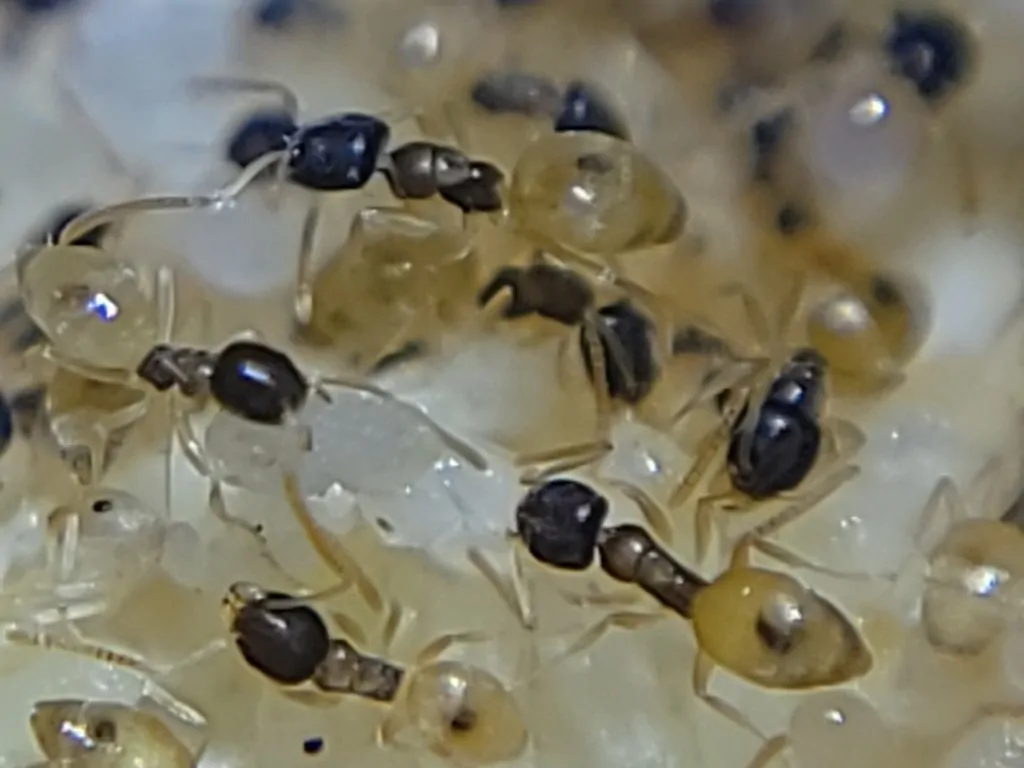
Workers measure about 1/16 inch long, among the smallest ants you will encounter indoors. The head and thorax run a deep dark brown, while the legs and the gaster, the rear body segment, stay pale and almost milky, which gives the species its name and makes a trail easy to miss until it crosses something light colored like a countertop.
How to Identify Ghost Ants
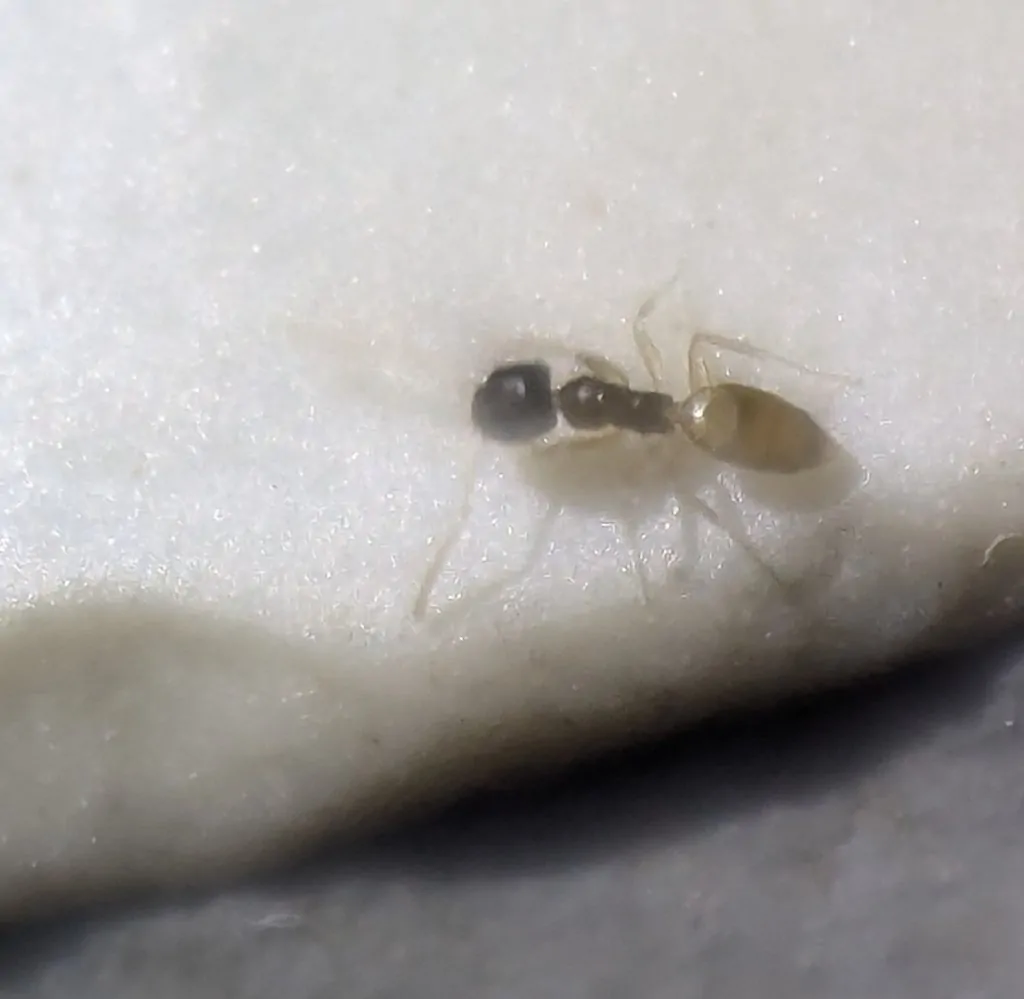
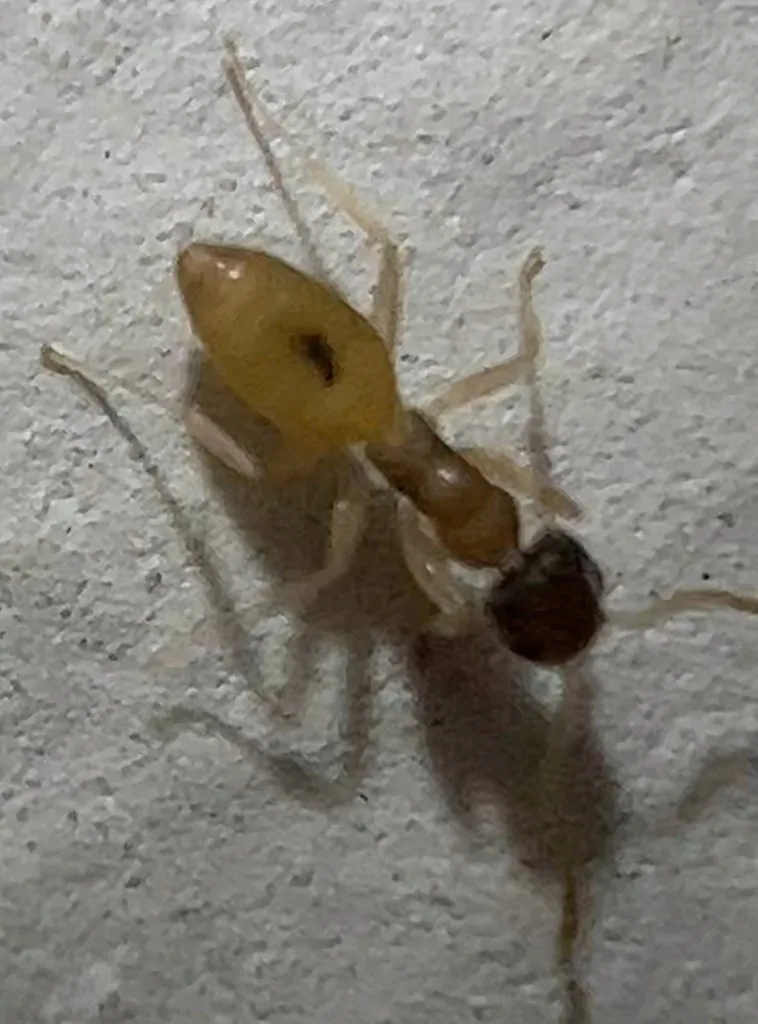
Identify a ghost ant by three things together, a size near 1/16 inch, a dark head and thorax paired with pale, almost see through legs and gaster, and a single hidden node at the waist. A crushed worker gives off a faint rotten coconut smell, the same defense chemical produced by the closely related odorous house ant.
How Big Are Ghost Ants
Workers run close to 1/16 inch long, with every worker in a colony measuring about the same size. This makes ghost ants smaller than odorous house ants and far smaller than Argentine ants, which both commonly trail through the same Los Angeles kitchens.
What Color Are Ghost Ants
Color is the fastest identification shortcut. A dark head and thorax sitting above pale, almost translucent legs and a pale gaster is a combination no other common household ant shares, including its closest relative, the odorous house ant, which runs dark across the entire body.
Ghost Ants vs Look Alike Ants
| Trait | Ghost Ant | Odorous House Ant | Pharaoh Ant | Argentine Ant |
|---|---|---|---|---|
| Size | About 1/16 inch | 1/16 to 1/8 inch | About 1/16 inch | About 1/8 inch |
| Color | Dark head and thorax, pale legs and gaster | Dark brown to shiny black | Light yellow to red, darker abdomen | Light to dark brown |
| Waist (node) | One node, hidden | One node, hard to see | Two nodes | One node |
| Distinguishing feature | Pale legs and gaster look almost invisible | Strong rotten coconut smell when crushed | Two node waist, unique among these four | Faint musty smell when crushed |
Send us a close up photo of the trail and we confirm the species before you buy the wrong bait.
Are Ghost Ants Established in Los Angeles
Ghost ants are not an established yard ant in Los Angeles the way Argentine ants, odorous house ants, and pavement ants are. Entomologists at the University of Florida, the leading academic source on this species, note ghost ants in cooler and northern climates survive mainly in heated buildings and greenhouses rather than outdoors year round. California does not appear among the states where the species holds a confirmed outdoor population, unlike Florida, Hawaii, and parts of Texas.
For a Los Angeles property, ghost ants usually arrive as hitchhikers, carried in on nursery stock, a newly purchased houseplant, or shipped goods, and then survive indoors in a warm, humid spot such as a wall void near plumbing, a planter, or a heated multi unit building. A property with frequent plant deliveries, an interior courtyard, or a greenhouse style sunroom carries a higher chance of an introduction than a typical yard. This is useful context before you assume every tiny ant in your kitchen is a ghost ant, since Argentine ants and odorous house ants are both far more likely culprits in most Los Angeles neighborhoods.
Where Ghost Ants Nest
Indoors, ghost ants nest in wall voids, cabinet gaps, spaces behind baseboards, cracks around plumbing, and directly in the soil of potted plants. These sites give the colony the warmth and moisture it needs to survive year round inside a climate controlled building.
In the warm, humid climates where ghost ants live outdoors full time, colonies nest in damp dead grass, loose bark, cavities under debris, and the bases of palm fronds. In Los Angeles, outdoor activity tends to concentrate in similarly sheltered, moisture retaining spots such as mulch beds and potted landscaping, especially near a building already carrying an indoor colony.
What Attracts Ghost Ants
Ghost ants chase sweets first, then honeydew from the insects living on your houseplants. Workers forage aggressively for sugar, syrup, and anything sweet left on a counter, while also tending aphids and other sap feeding insects on indoor and outdoor plants for the honeydew they produce.
Beyond sweets, ghost ants scavenge dead insects and prey on living ones when the opportunity comes up. A plant collection with an aphid problem, a kitchen with exposed sugar or syrup, and a consistently moist spot near plumbing together create the exact conditions this species looks for.
Ghost Ant Colonies and Why They Are Hard to Pin Down
A ghost ant colony often has several queens and rarely stays in one spot for long. This combination, multiple reproducing queens and a willingness to relocate, is why a ghost ant problem feels like it keeps shifting rooms even after you treat the spot where you first saw a trail.
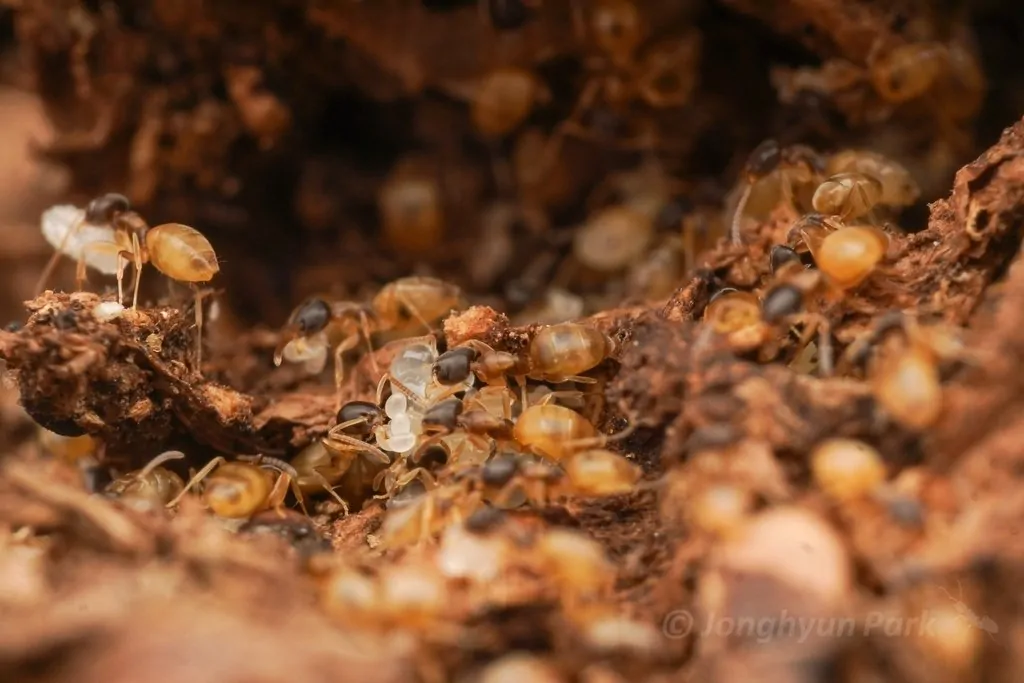
Colonies split through budding, where one or more queens leave with a group of workers to start a new nest nearby, and the two nests continue exchanging workers along shared trails rather than competing. A colony sometimes occupies a given site for only days or weeks before moving again, which is why a single spot treatment often misses the bigger picture.
How to Get Rid of Ghost Ants
Trace the trail first, since a ghost ant colony usually has more than one nest working at once.
- Follow a foraging trail back toward its source rather than wiping it away, since the direction ants travel points toward the nest or entry point.
- Set a small amount of sweet bait directly on the trail and check it within one to two days.
- If ants are not feeding on the bait after this window, move it, since ghost ants shift preference between sweet and protein food depending on the colony’s needs at the time.
- Store food in sealed containers and clean up spilled sugar, syrup, and juice promptly, since these are the easiest food source available to a forager.
- Reduce moisture from leaking pipes, condensation, and overwatered houseplants, since damp conditions support both outdoor and indoor nest sites.
DIY vs Professional Treatment for Ghost Ants
| Method | What It Targets | Where It Falls Short |
|---|---|---|
| Store bought repellent spray | Ants in view on contact | Leaves the nest untouched and often pushes a colony to bud into a new spot |
| Single location sweet bait | One active trail | Misses other nests in a multi queen colony and the protein feeding periods sweet bait does not cover |
| Removing moisture and food sources | The conditions drawing a colony indoors | Slows new activity but does not remove a nest already established in a void or planter |
| Professional inspection and treatment | The full trail network and multiple nests | Requires licensed products and nest tracing skills, not available at a retail store |
A store bought spray kills the ants it touches and does nothing to a colony relocating every few weeks. A licensed technician traces the full trail network and treats the nests producing it.
Ghost Ant Treatment Cost in Los Angeles
Ghost ant treatment in Los Angeles follows the same pricing as our other general ant control work, since the treatment approach covers the species found on your property, not one price per ant type.
| Service | Typical Price Range |
|---|---|
| One time ant treatment | Call for pricing |
| Quarterly pest control plan, residential | $300 every 3 months, or $240 every 3 months with a yearly agreement |
| Quarterly pest control plan, apartment or condo | Call for pricing |
An on-site visit confirms the species, checks whether the activity points to an indoor introduction or an established outdoor colony, and gives you an exact price before any work begins.
Ghost Ant Control in Los Angeles, Our Process
My Termite Company handles ghost ant calls in five steps, confirm the species, trace active trails to their nests, apply a treatment matched to indoor or outdoor conditions, follow up on results, and recommend the moisture and exclusion fixes needed to prevent a new introduction.
- We identify the ant species from your photos or an on site inspection, since several common Los Angeles ants resemble ghost ants at a glance.
- We trace foraging trails back to their nests, indoors and outdoors, since an active colony often runs more than one nest at a time.
- We apply a treatment matched to the species and the location, built to reach multiple queens through normal foraging.
- We follow up after treatment to make sure activity has stopped.
- We recommend moisture fixes and entry point sealing to reduce the chance of a new colony establishing after a future plant delivery or purchase.
My Termite Company has served Los Angeles since 2008 under California SPCB License #7487, serving Los Angeles and the surrounding cities, including Pasadena, Burbank, Alhambra, Glendale, and Highland Park.
Frequently Asked Questions
Are ghost ants common in Los Angeles?
Ghost ants are not an established yard ant here the way Argentine ants are. Most Los Angeles sightings trace back to an indoor introduction through a plant purchase, nursery stock, or a heated building rather than a yard colony.
How do I tell a ghost ant from an odorous house ant?
Check the legs and rear body segment. Ghost ants carry pale, almost see through legs and a pale gaster under a dark head and thorax, while odorous house ants run dark across the entire body.
Do ghost ants bite or sting?
They carry no stinger, and bites are rare and generally harmless, noticed only if the nest itself is directly disturbed.
Why does my ghost ant problem keep moving to a new room?
Ghost ant colonies often carry several queens and relocate every few days or weeks, so a single spot treatment frequently misses other active nests feeding the same trail network.
Do you treat ghost ants in apartments and businesses?
Yes. Our commercial pest control team treats ghost ants in apartment buildings, offices, greenhouses, and other commercial properties across Los Angeles and nearby cities such as Pasadena and Burbank.
Get Rid of Ghost Ants Today
Call (818) 940-0203 for pricing or to schedule ghost ant treatment in Los Angeles. Our technicians confirm the species, trace every active trail, and treat the nests producing the problem, not only the ants crossing your counter.
