

How to Identify & Get Rid of Odorous Ants
My Termite Company finds and removes odorous house ant colonies across Los Angeles. This page covers how to identify odorous house ants, the smell giving them away, where they nest, why spray from the hardware store often makes an infestation worse, and what our technicians do differently. My Termite Company has served Los Angeles since 2008 under California SPCB License #7487. If you keep seeing small dark ants in your kitchen with a bad smell when crushed, call (818) 940-0203 for pricing. See our full guide to ant species found in Los Angeles for other ant types.
What Are Odorous House Ants
Odorous house ants are small, dark ants naming themselves the moment you crush one. The scientific name is Tapinoma sessile, and the University of California’s Statewide Integrated Pest Management Program lists it among the handful of ant species driving most household calls in the state. After Argentine ants, odorous house ants are the ant our technicians hear about most from Los Angeles kitchens.
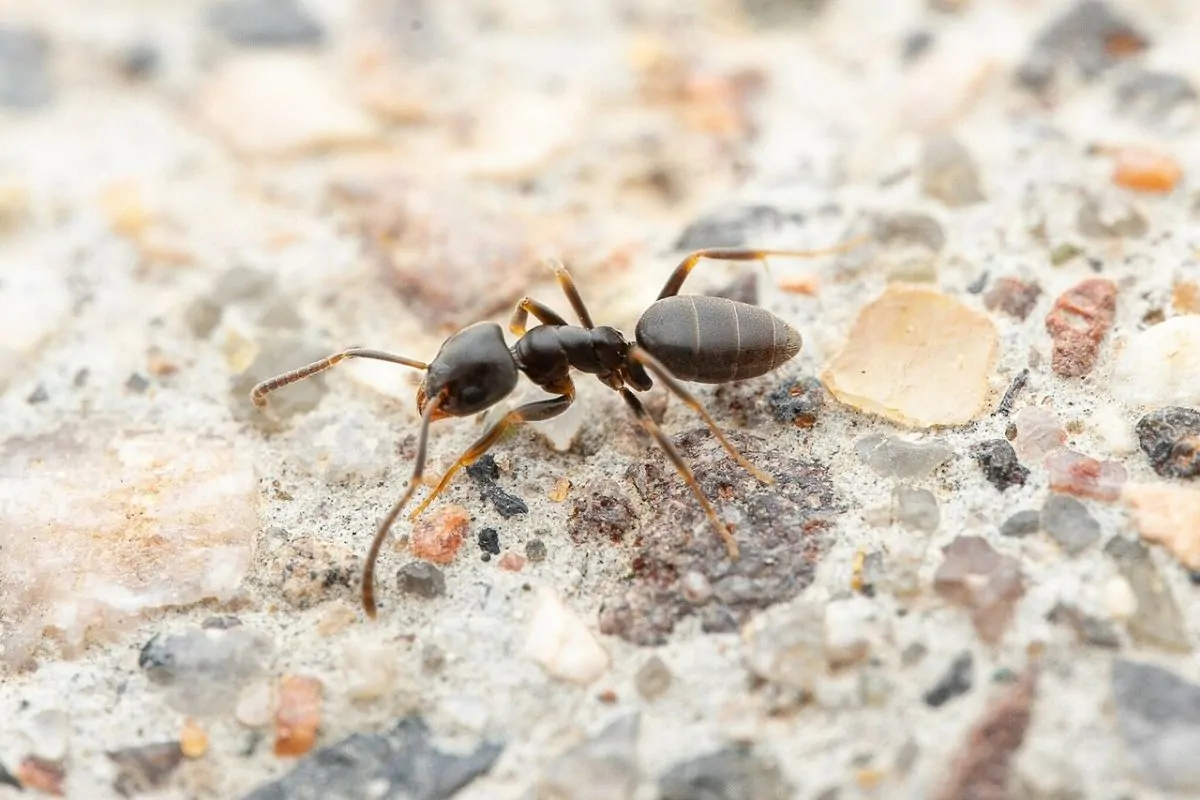
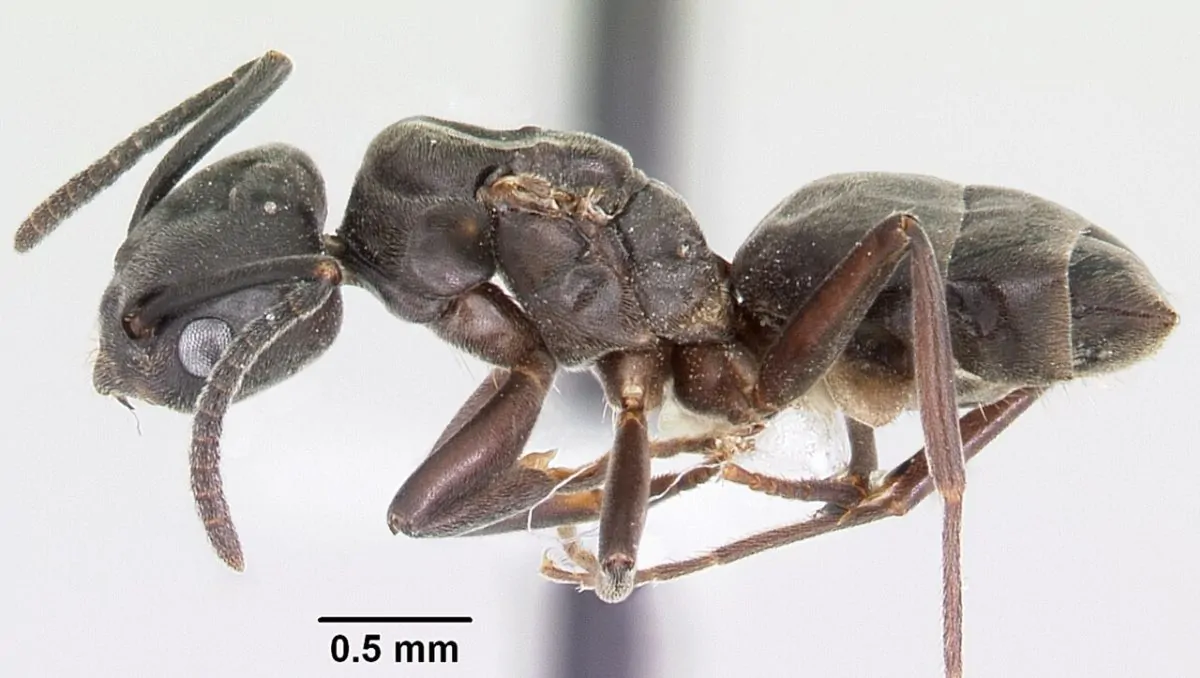
Workers measure about 1/8 inch long and run dark brown to shiny black, with one node at the waist hidden under the abdomen when you look down from above. The thorax looks uneven and lumpy from the side, unlike the smoother profile of a carpenter ant. They feed on dead and living insects, and indoors they chase sugar, grease, and anything sweet left on a counter. A trail of these ants into your kitchen almost always points to a food source or a moisture problem nearby, not a random visit.
How to Identify Odorous House Ants
Identify an odorous house ant by three things together, a size under 1/8 inch, a single hidden node at the waist, and an uneven thorax when you view the ant from the side. None of these traits alone confirms the species, since several common Los Angeles ants share one or two of them.
How Big Are Odorous House Ants
Workers run about 1/8 inch long, smaller than a carpenter ant and close in size to a pavement ant. All workers in a colony measure roughly the same size, unlike carpenter ants, which carry noticeably larger major workers alongside smaller ones.
What Color Are Odorous House Ants
Color runs dark brown to shiny black across the whole body, with no red, yellow, or two tone markings. A shiny black ant under 1/8 inch long in your kitchen is far more likely an odorous house ant than a carpenter ant, which never runs this small.
Odorous House Ants vs Look Alike Ants in Los Angeles
| Trait | Odorous House Ant | Argentine Ant | Pavement Ant |
|---|---|---|---|
| Size | 1/16 to 1/8 inch | About 1/8 inch | 1/8 to 1/4 inch |
| Color | Dark brown to shiny black | Light to dark brown | Dark brown to black, pale legs |
| Waist (node) | One node, hard to see | One node | One node |
| Back shape (profile) | Uneven, with a dip | Smooth and evenly rounded | Grooved, with a pair of small spines |
| Smell when crushed | Strong rotten coconut odor | Faint, musty odor | No distinct odor |
Send us a close up photo of the ant trail in your kitchen and we confirm the species before you buy the wrong product.
The Smell Giving Them Away
Crush an odorous house ant and you get your answer fast. Entomologists at Utah State University describe the smell as a rotten, coconut like odor, strong enough for most homeowners to notice it without trying. No other common Los Angeles house ant produces this exact smell when crushed, which makes it the single fastest identification test available to you.
The smell comes from a chemical the ant releases as a defense response, not a sign of disease or contamination in your home. If you squash a trail of small dark ants on your counter and catch a sour, coconut like smell, treat it as a confirmed odorous house ant identification and skip straight to the control section below.
Where Do Odorous House Ants Nest
Odorous house ants nest almost anywhere moisture and shelter meet. Outdoors, they build shallow nests under stones, mulch, logs, and landscaping debris. Indoors, they favor wall voids, areas around leaking pipes, and spaces near water heaters where warmth and moisture both stay steady year round.
Los Angeles landscaping hands this species exactly what it wants. Deep mulch beds, irrigation lines running along a foundation, and potted plants sitting against exterior walls all create the shallow, moist nesting sites odorous house ants prefer. Indoors, a slow leak under a sink or a sweating pipe behind a wall gives a colony everything it needs to set up permanently rather than only passing through.
What Causes Odorous House Ants in Your House
Moisture and an easy food source cause most odorous house ant problems. A colony nesting in your yard sends foraging trails toward whatever smells sweet, and once a trail finds a reliable food source indoors, the colony treats your kitchen as part of its territory.
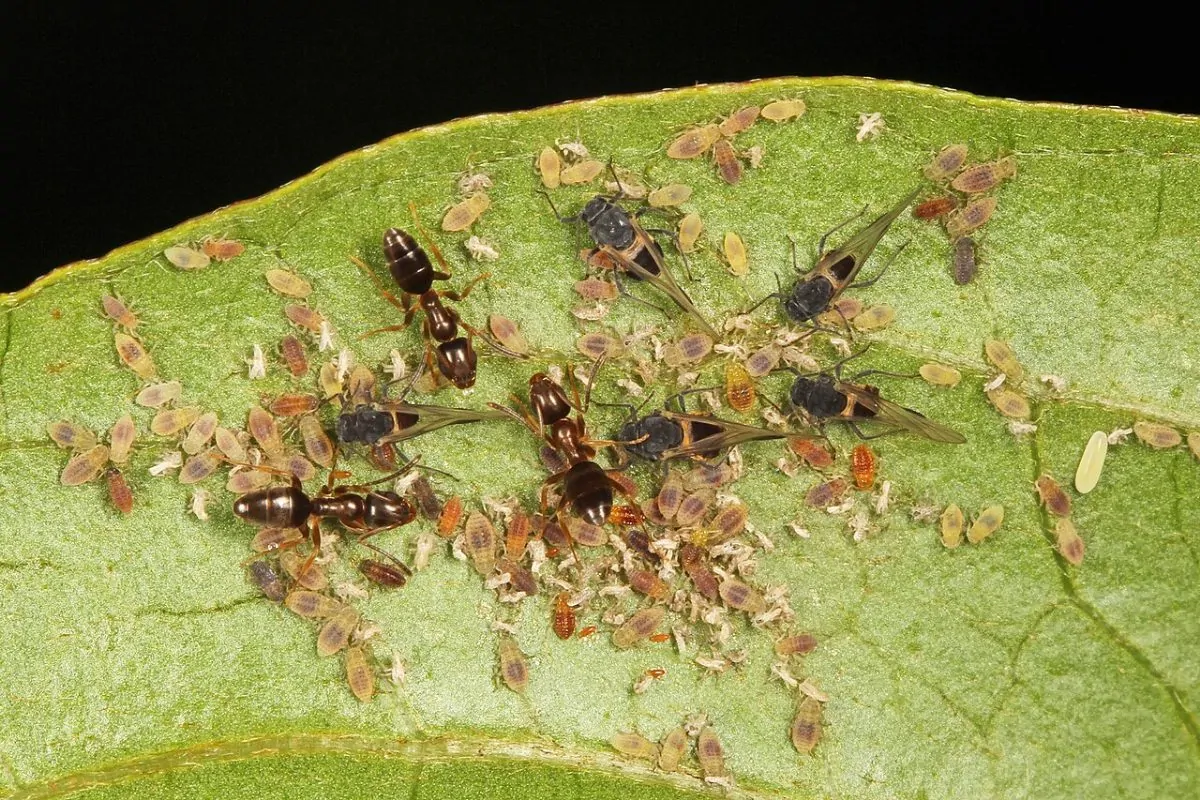
Common causes include a leaking pipe or fixture feeding moisture into a wall void, mulch piled against the foundation, aphids or scale insects on nearby plants producing honeydew, pet food left out overnight, and small gaps around doors, windows, and utility lines giving ants a direct path inside. Fixing the moisture source and cutting off the food supply does more to stop a colony than any spray applied after the fact.
Why Colonies Are Hard to Eliminate
A mature odorous house ant colony rarely has a single queen or a single nest, and this is the reason this species gives homeowners so much trouble. A natural outdoor colony might hold only 15 to 30 workers around a single queen, but an established colony near a structure sometimes grows into a supercolony linking multiple nests and tens of thousands of workers, occasionally more.
This species reproduces through a process called budding. A queen and a group of workers break off from the main colony and start a new nest nearby, and the new colony cooperates with the original rather than competing against it. Budding happens on its own once a colony gets large, and it also happens in response to a disturbance, which brings us to the biggest mistake homeowners make.
Why Spray From the Store Often Makes It Worse
Reaching for a can of ant spray feels like the obvious move, and it is usually the wrong one. Repellent sprays and contact insecticides kill the ants they touch, but they also scatter the rest of the colony, and a scattered colony buds into several new nests instead of one. You go from one trail in your kitchen to ant activity in three rooms within a week.
A barrier spray around your foundation causes a related problem. It cuts the trail connecting an indoor nest to its outdoor food source, leaving the indoor portion of the colony stranded and searching for a new way in, often through a different crack or gap than the one you sealed. The fix is a non repellent treatment ants rarely detect or avoid, carried back to the nest and shared with the queen, rather than a product designed to kill on contact.
When Are Odorous House Ants Most Active
Odorous house ants forage across a wide temperature range, roughly 43 to 95 degrees Fahrenheit, which keeps them active through most of a Los Angeles year. Mating flights happen in early to mid summer, when winged males and females leave the nest, mate, and the females search out a site for a new colony.
Winter slows activity outdoors, as scattered subcolonies pull back into a smaller number of overwintering nests. Los Angeles winters rarely turn cold enough to stop this species completely, so indoor activity through the cooler months usually points to a nest already living somewhere warm and moist inside the structure, not a fresh invasion from outside.
How to Get Rid of Odorous House Ants
Find the nests and treat them directly, since killing the ants on your counter does nothing to the colony producing them.
- Follow the trail back to its source rather than spraying only the ants in view, since the visible trail leads straight to an entry point or a nest.
- Fix the moisture source feeding the colony, whether the source is a leaking pipe, a sweating water heater, or irrigation running against the foundation.
- Remove honeydew producing insects such as aphids and scale from plants near the house, since this cuts off an outdoor food supply drawing ants toward your home.
- Use a slow acting, non repellent bait placed directly on the trail, so foraging workers carry it back and share it with the colony instead of scattering.
- Seal entry points only after the colony is under control, since early sealing traps ants inside and pushes them toward a new indoor path.
DIY vs Professional Treatment for Odorous House Ants
| Method | What It Targets | Where It Falls Short |
|---|---|---|
| Store bought repellent spray | Ants in view on contact | Scatters the colony and triggers budding into new nests |
| Store bought sweet bait | Foragers carrying the bait back to the nest | Odorous house ants shift between sweet and protein food by season, so one bait type misses part of the year |
| Sealing cracks and gaps alone | Entry points into the structure | Does nothing to the nest feeding the trail, and can trap ants inside if done too early |
| Removing moisture and food sources | The conditions drawing a colony indoors | Slows new activity but does not remove an existing nest already established |
| Professional non repellent treatment | The nest and the queen, through normal foraging behavior | Requires licensed products and placement, not available at a retail store |
A store bought spray treats the ants on your counter. A licensed technician treats the colony producing them, using products and placement methods not sold at a hardware store.
Odorous House Ant Treatment Cost in Los Angeles
Odorous house ant treatment in Los Angeles follows the same pricing as our other general ant control work, since the treatment approach covers the species found on your property, not one price per ant type.
| Service | Typical Price Range |
|---|---|
| One time ant treatment | Call for pricing |
| Quarterly pest control plan, residential | $300 every 3 months, or $240 every 3 months with a yearly agreement |
| Quarterly pest control plan, apartment or condo | Call for pricing |
An on-site visit confirms the species, locates the nests feeding the trail in your home, and gives you an exact price before any work begins.
Odorous House Ant Control in Los Angeles, Our Process
My Termite Company removes odorous house ants in five steps, identify the species and the scale of activity, trace trails back to nests and entry points, apply a non repellent treatment matched to what we find, follow up on results, and close off the conditions drawing ants back.
- We identify the ant species and inspect the full property for trails, nests, and moisture sources.
- We trace foraging trails back to their nests, indoors and outdoors, rather than treating only the ants in view.
- We apply a non repellent treatment designed to reach the colony through normal foraging, avoiding the scattering effect of a repellent spray.
- We follow up after treatment to make sure activity has stopped.
- We recommend the moisture fixes and exclusion work needed to keep a new colony from moving in.
My Termite Company has served Los Angeles since 2008 under California SPCB License #7487, treating properties across Los Angeles and the surrounding cities, including Pasadena, Burbank, Alhambra, and Highland Park.
Frequently Asked Questions
What do odorous house ants smell like?
A rotten, coconut like odor when crushed, strong enough to confirm the species without a magnifying glass.
Why do odorous house ants keep coming back after I spray them?
Store bought sprays scatter the colony instead of removing it, and a scattered colony buds into new nests rather than disappearing.
Are odorous house ants dangerous?
No. They do not bite or sting in any way threatening to people or pets, and they carry no documented disease risk, though a large indoor colony remains a sanitation and nuisance problem worth treating.
How many ants are in an odorous house ant colony?
A natural colony might hold as few as 15 to 30 workers, but an established colony near a building sometimes grows into a supercolony of tens of thousands of workers across several linked nests.
Do you treat odorous house ants in apartments and businesses?
Yes. Our commercial pest control team treats odorous house ants in apartment buildings, offices, and other commercial properties across Los Angeles.
Get Rid of Odorous House Ants Today
Call (818) 940-0203 for pricing or to schedule odorous house ant treatment in Los Angeles. Our technicians find the nests, stop the spray and scatter cycle, and fix the conditions bringing ants back, not only the ants on your counter.
