

How to Identify Fire Ants & Get Rid of Them
My Termite Company inspects for and treats fire ant activity across Los Angeles County. This page covers how to identify fire ants, where they are found in the region, California’s quarantine program, whether a fire ant sting is dangerous, and what to do if you find a mound. My Termite Company has served Los Angeles since 2008 under California SPCB License #7487. If you suspect fire ant activity on your property, call (818) 940-0203 for pricing. See our full guide to ant species found in Los Angeles for other ant types.
What Are Fire Ants
Red imported fire ants are a regulated, aggressive ant species spreading into parts of Los Angeles County. The scientific name is Solenopsis invicta, often shortened to RIFA, an invasive species native to South America and now established in scattered areas of Southern California under active state monitoring.
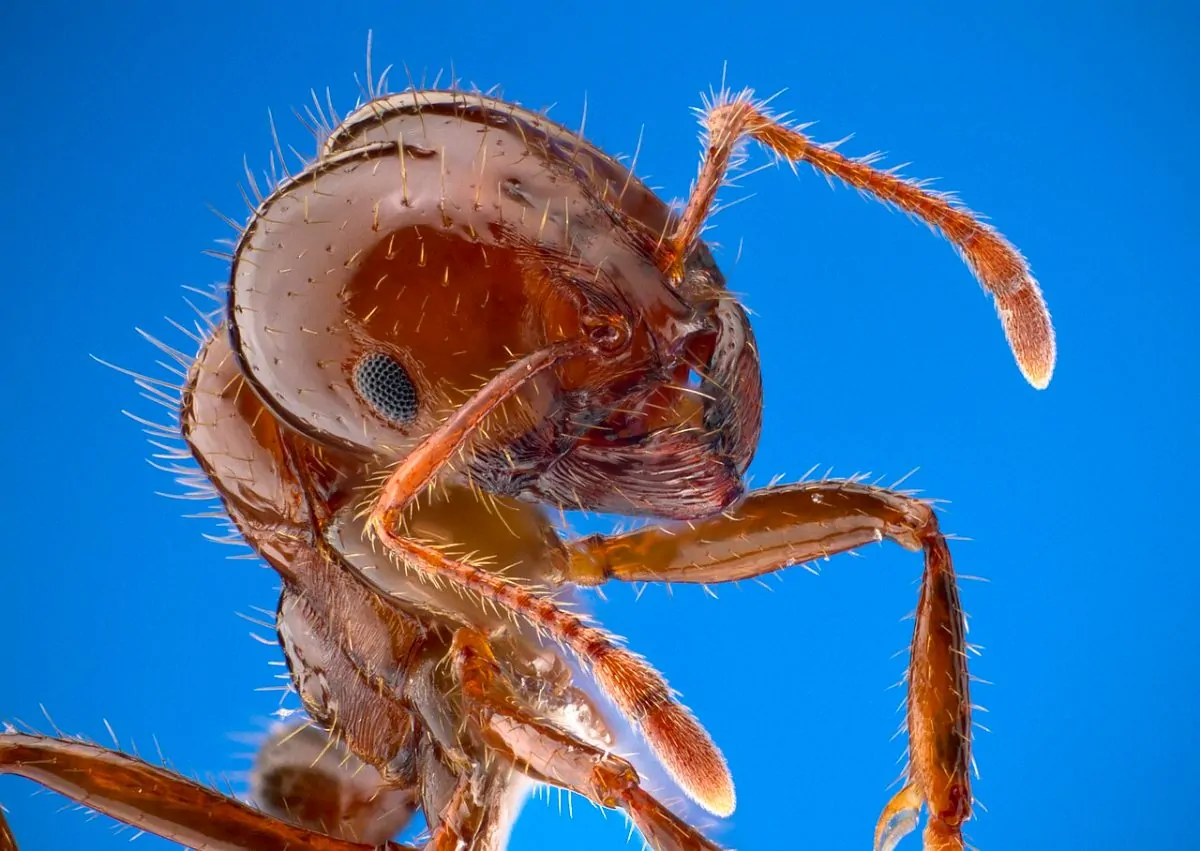
California also has a native southern fire ant, a separate species homeowners frequently mistake for the invasive one. The two look different up close and behave differently in a yard, which is why identification matters before you treat anything or report a mound. Workers feed on insects, seeds, and sweet substances, and a colony defends its mound as a group rather than fleeing from a disturbance the way most nuisance ants do.
How to Identify Fire Ants
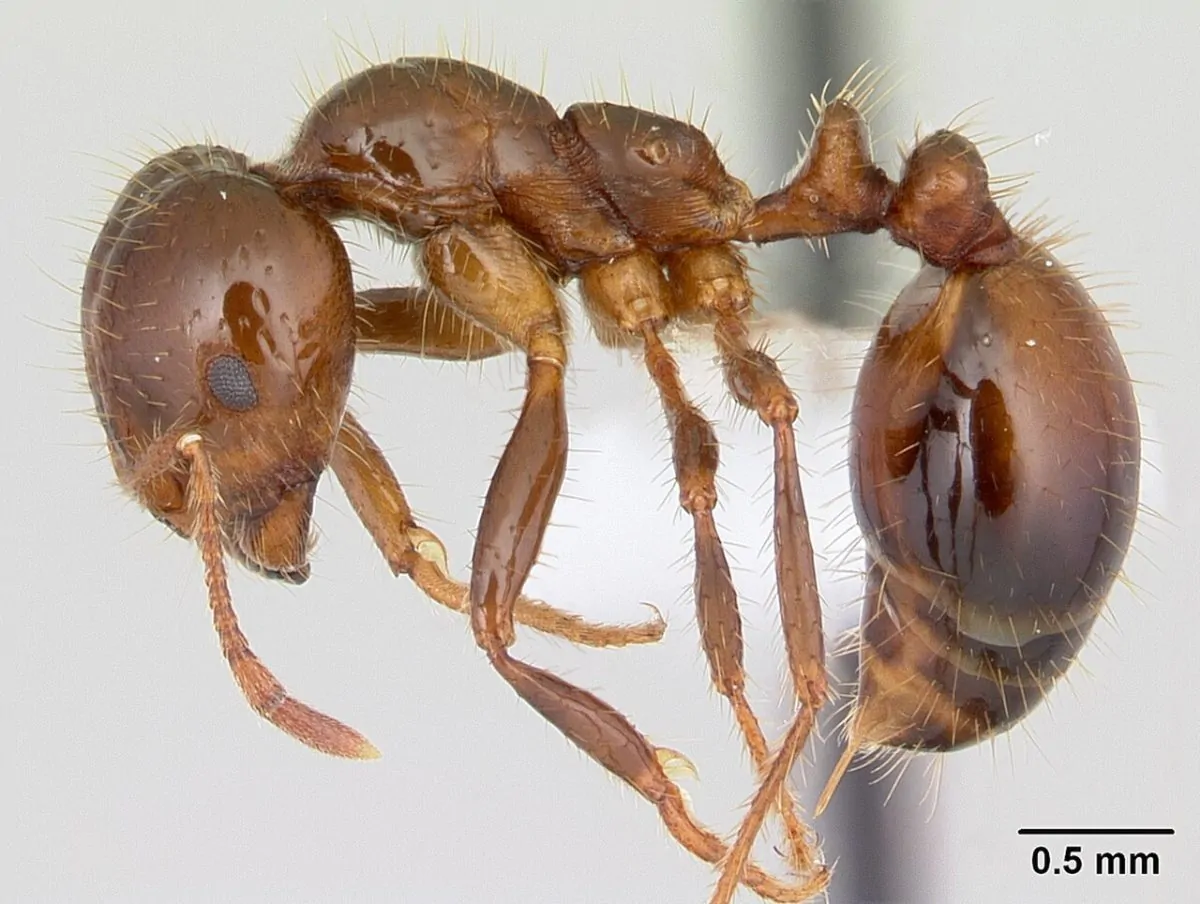
Identify a fire ant by three things together, a size between 1/8 and 1/4 inch, an almost uniform dark reddish brown color, and a narrow two segmented waist. A mound disturbed by a stick or a footstep erupting into dozens of stinging workers within seconds is itself a strong identification sign.
How Big Are Fire Ants
Workers range from about 1/8 to 1/4 inch long, with noticeable size variation inside a single colony. A colony’s queen grows considerably larger than any worker, sometimes reaching 5/8 inch.
What Color Are Fire Ants
Fire ant workers run an almost uniform dark reddish brown across the body. This sets them apart from the native southern fire ant, which carries a reddish head and thorax against a darker brown abdomen, a two tone pattern fire ant workers do not share.
Fire Ants vs the Native Southern Fire Ant
| Trait | Red Imported Fire Ant | Native Southern Fire Ant |
|---|---|---|
| Size | 1/8 to 1/4 inch workers, queens to 5/8 inch | 1/10 to 1/5 inch (2.5 to 4.5 mm) |
| Color | Almost uniform dark reddish brown | Bicolored, reddish head and thorax, dark brown abdomen |
| Waist | Two segmented node | Two segmented node |
| Mound response | Fast, coordinated group attack when disturbed | Less uniformly aggressive |
| Regulatory status | Regulated under CDFA quarantine in parts of LA, Orange, and Riverside counties | Not regulated |
Send us a close up photo of the ants and the mound before you treat anything. Misidentifying a native fire ant as the invasive species, or the reverse, changes what happens next.
Where Fire Ants Are Found in Los Angeles County
Fire ants are not spread evenly across Los Angeles. The state’s confirmed activity in the county sits mainly in the Cerritos and Azusa areas, with much larger, more established populations in neighboring Orange and Riverside counties.
This matters for anyone searching for fire ant information in the broader Los Angeles area. Most of the city and the surrounding San Gabriel Valley, Westside, and San Fernando Valley communities remain outside the areas where fire ants are known to have established. A dark reddish ant in a yard outside these areas is far more likely to be a native species or another common ant already covered on our ant control page. A property inside or near a regulated area deserves a closer look, and a mound anywhere in the county is worth reporting rather than guessing about.
California’s Fire Ant Quarantine Program
California regulates the red imported fire ant under a state interior quarantine covering specific areas of three counties, all of Orange County, portions of the Cerritos and Azusa areas of Los Angeles County, and portions of Riverside County around Moreno Valley, Indio, and the Palm Springs area.
The quarantine restricts moving regulated items out of these areas, including soil, plants and sod with roots attached, baled hay stored on the ground, and used soil moving equipment, unless the items meet a certification or inspection standard. A retail purchase typically moves with a sales receipt. A homeowner outside a known regulated area who finds a suspicious mound should call the California Department of Food and Agriculture’s fire ant hotline at (888) 434-7326 rather than treat it without confirmation, since new detections outside the mapped areas are exactly what the state program is built to catch early.
What Fire Ant Mounds Look Like
A fire ant mound builds into a dome reaching 10 to 12 inches high with no visible entry hole on top, since workers travel through underground tunnels radiating out from the mound instead. Mound size depends heavily on soil type, and in some conditions a colony leaves little surface mound at all, so absence of a mound does not rule out a nest nearby.
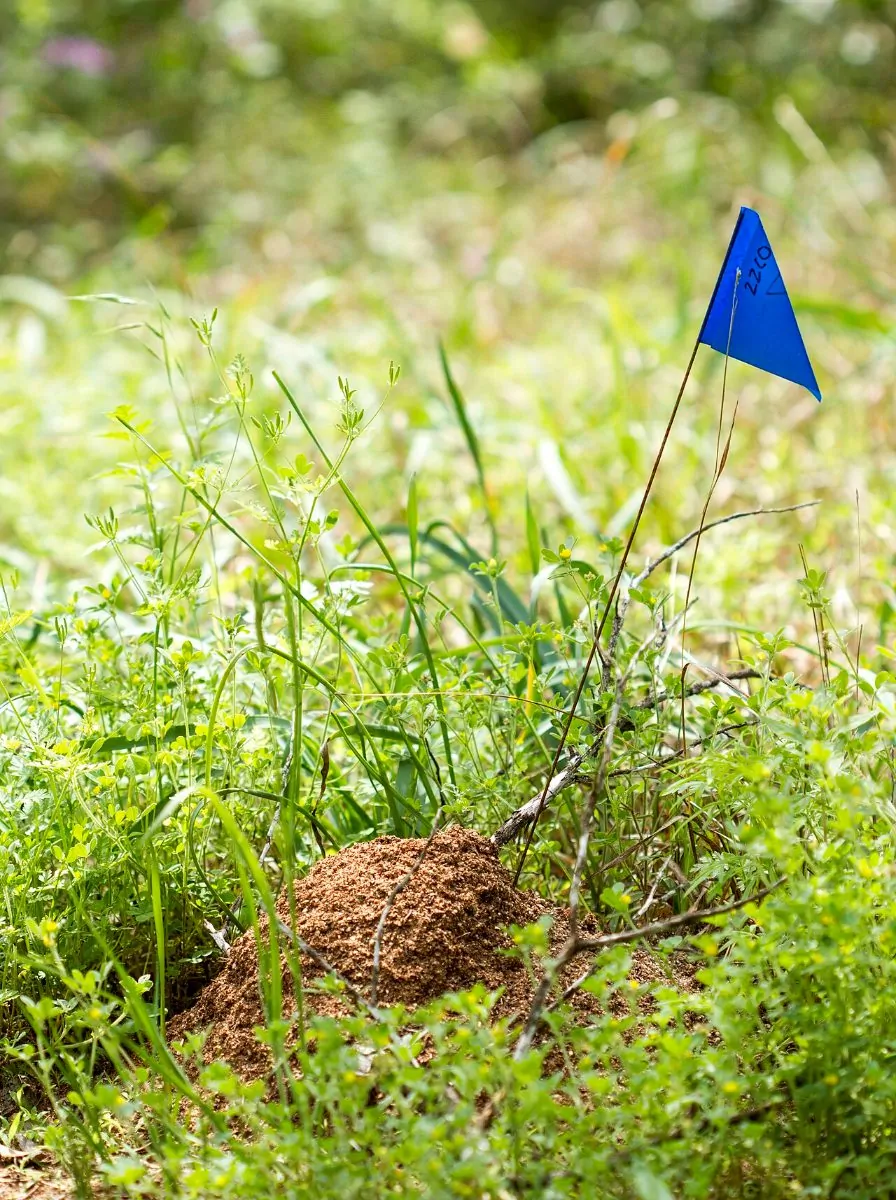
Fire ant colonies in California carry a single queen or several, and researchers have not settled which pattern dominates locally. A colony with several queens expands and recovers from disturbance faster than a single queen colony, which affects how a treatment plan gets built.
Are Fire Ant Stings Dangerous
A fire ant sting causes sharp, immediate pain followed by a fluid filled pustule within about a day. Fire ants bite to grip the skin first, then sting repeatedly since their stinger is not barbed the way a honey bee’s is, so one encounter with a disturbed mound often means several stings at once.
The pustule usually peaks around 72 hours and takes weeks to fully clear, leaving a small scar in some cases. For most people, a handful of stings causes temporary pain and itching and nothing more serious. A small percentage of people develop a more severe allergic reaction, and in rare cases even a few stings trigger anaphylaxis, a medical emergency requiring immediate attention. Anyone with a history of severe allergic reactions to insect stings should treat a fire ant encounter with the same caution as a bee or wasp sting and seek medical care promptly if symptoms spread beyond the sting site.
Why Fire Ants Are Different From Other Los Angeles Ants
Fire ants defend their mound as a group, which sets them apart from the nuisance ants covered on our other ant pages. Argentine ants, odorous house ants, and pavement ants forage for food and rarely attack a person standing near a trail. A disturbed fire ant mound responds with a coordinated group attack within seconds.
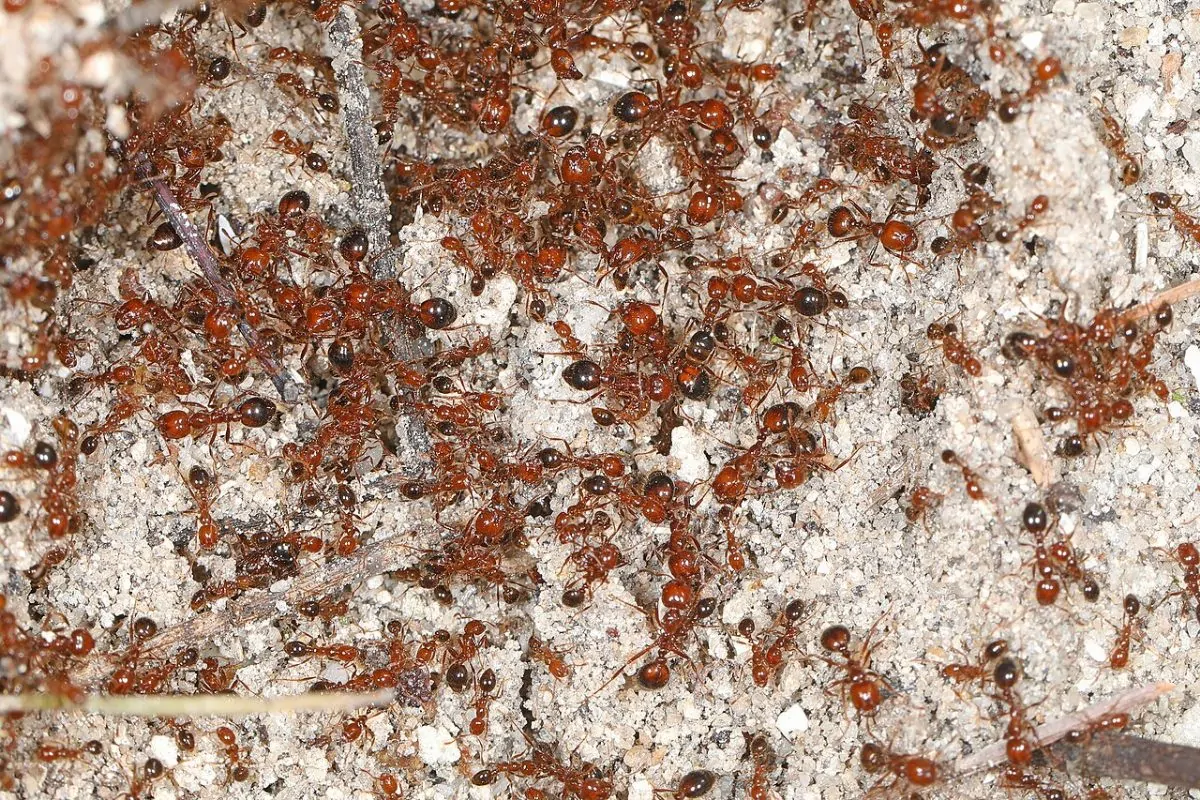
This difference changes how a fire ant problem gets handled. A nuisance ant trail calls for tracing a path back to a food source or a crack in the foundation. A fire ant mound calls for confirming the species first, checking it against the known regulated areas, and treating it as a mound to approach carefully rather than a trail to follow with a magnifying glass.
How to Get Rid of Fire Ants
Do not disturb a suspected fire ant mound before you confirm the species, since the wrong first move on a regulated pest creates problems a nuisance ant never would.
- Keep people and pets away from the mound and avoid touching it with a stick, a hose, or a foot to test it.
- Take a clear photo of the ants and the mound shape, and compare it against the identification details above or send it to us directly.
- If the mound sits outside a known regulated area, report it to the California Department of Food and Agriculture at (888) 434-7326 before any treatment begins.
- If the mound sits inside or near a known regulated area, schedule a professional inspection rather than applying a store bought treatment, which often scatters the colony instead of eliminating it.
- Keep children and pets out of the yard section around the mound until treatment is complete and confirmed effective.
DIY vs Professional Treatment for Fire Ants
| Method | What It Targets | Where It Falls Short |
|---|---|---|
| Store bought mound drench | Workers and upper colony on contact | Often leaves the queen or queens protected deep in the mound, and scatters the colony into satellite nests |
| Boiling water poured on the mound | The visible mound structure | Rarely reaches the full depth of an established colony and risks injury during application |
| Self reporting a confirmed mound | A new detection outside mapped areas | Identifies the problem but does not treat it, professional follow up is still required |
| Professional inspection and treatment | The full colony, matched to confirmed species and location | Requires licensed products and coordination with regulated area status |
A store bought mound drench often kills only the ants it touches and leaves the queen or queens protected deep in the colony. A licensed technician treats the full colony and documents the finding appropriately given the regulatory status of this species.
Fire Ant Treatment Cost in Los Angeles
Fire ant treatment pricing in Los Angeles depends on whether the colony falls inside an active quarantine area, since a confirmed detection sometimes involves coordination with state or county agricultural authorities in addition to treatment.
| Service | Typical Price Range |
|---|---|
| Fire ant inspection and identification | Call for pricing |
| Fire ant treatment, standard colony | Call for pricing |
| Fire ant treatment, property in a regulated area | Call for pricing |
An on-site visit confirms the species, checks the property against the known regulated areas, and gives you an exact price before any work begins.
Fire Ant Control in Los Angeles, Our Process
My Termite Company handles fire ant calls in five steps, confirm the species, check the property against known regulated areas, apply a treatment matched to what we find, follow up on results, and advise on next steps if the finding needs to be reported.
- We identify the ant species from your photos or an on site inspection before recommending any treatment.
- We check the property location against the current state regulated areas for red imported fire ants.
- We apply a treatment matched to the colony we find, built to reach the queen rather than only the visible workers.
- We follow up after treatment to make sure activity has stopped.
- We advise you on reporting requirements if the finding falls outside the currently mapped regulated areas.
My Termite Company has served Los Angeles since 2008 under California SPCB License #7487, serving Los Angeles and the surrounding cities, including Pasadena, Burbank, Alhambra, Glendale, and Highland Park.
Frequently Asked Questions
Are fire ant stings dangerous?
Most stings cause temporary pain and a pustule, nothing more. A small percentage of people face a severe allergic reaction, and anyone with a history of severe reactions to insect stings should seek medical care promptly after a fire ant encounter.
What does the California fire ant quarantine mean for my property?
It restricts moving soil, plants, and similar items out of specific areas of Orange, Los Angeles, and Riverside counties without certification. It does not mean every property in those counties has an active infestation.
How do I know if the ants in my yard are fire ants or a native species?
Check color and the way the colony reacts to disturbance. Fire ant workers run a uniform dark reddish brown and respond to a disturbed mound with a fast group attack, while the native southern fire ant is bicolored and less uniformly aggressive. Send us a photo and we confirm it for you.
What should I do if I find a mound outside the known regulated areas?
Avoid disturbing it and call the California Department of Food and Agriculture at (888) 434-7326 to report a possible new detection before any treatment begins.
Do you treat fire ants in apartments and businesses?
Yes. Our commercial pest control team handles fire ant calls for apartment buildings, offices, and other commercial properties across Los Angeles and nearby cities such as Pasadena and Burbank.
Get Rid of Fire Ants Today
Call (818) 940-0203 for pricing or to schedule fire ant treatment in Los Angeles. Our technicians confirm the species, check your property against the current regulated areas, and treat the colony correctly from the first visit.
