

What Do Termites Look Like? Los Angeles Termite Identification Guide
Written and reviewed by the licensed termite team at My Termite Company, serving homeowners throughout Greater Los Angeles.
Think you may have found termites in your home?
Termites can look very different depending on whether you’re seeing a worker, soldier, or flying termite. They’re also commonly confused with flying ants, especially during swarm season.
This guide explains what termites look like, the two main termite types we see in Los Angeles, the signs they leave behind, and how to tell them apart from other insects.
Not sure what you found? Text a clear photo to (818) 940-0203 and our team can often tell you whether it looks like termite activity and what to do next.
What Do Termites Look Like?
A termite’s appearance depends on its role in the colony.
Worker Termites
- Cream or whitish, soft-bodied
- About 1/4 inch long
- Wingless, with straight antennae
Workers spend most of their lives hidden inside wood, walls, or soil. Most homeowners never see one unless damaged wood is opened.
Soldier Termites
- Pale or cream-colored body with a larger, darker head
- Strong mandibles used to defend the colony
- No wings
Soldiers are sometimes uncovered when infested wood or mud tubes are disturbed.
Flying Termites (Swarmers)
The form homeowners are most likely to actually see. Swarmers leave an established colony to start new ones.
- Dark brown to black bodies
- Straight antennae, a broad straight waist
- Four wings of roughly equal length
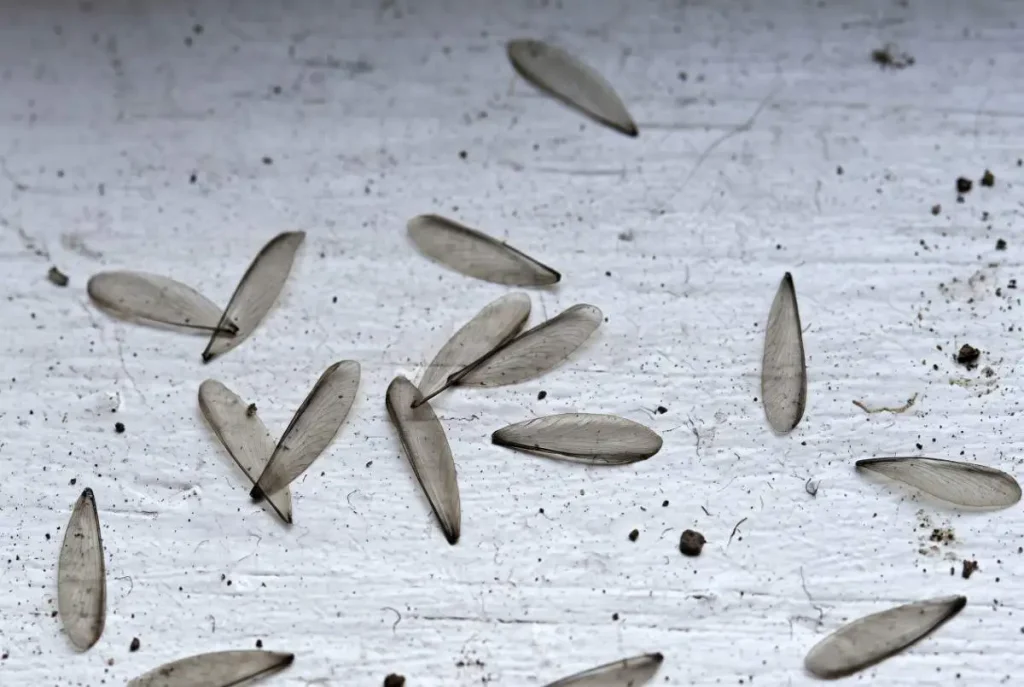
Commonly spotted around windows, doors, light fixtures, patios, and exterior walls. Sometimes the insects are gone by the time you notice, and all that’s left is a pile of discarded wings.
Termites vs. Flying Ants
Flying ants are one of the insects most often mistaken for termites. The fastest way to tell them apart: antennae, waist, and wings.
| Feature | Termite | Flying Ant |
| Antennae | Straight | Bent or elbowed |
| Waist | Broad and straight | Narrow and pinched |
| Wings | Four wings of similar length | Front wings longer than rear |
| Body shape | More uniform | Clearly segmented |
Quick rule: Termite = straight antennae + straight waist + equal wings. Flying ant = bent antennae + pinched waist + unequal wings.
The Two Main Termite Types in Los Angeles
Southern California properties commonly deal with drywood termites and subterranean termites. They live differently, leave different signs, and require different treatment.
Western Drywood Termites
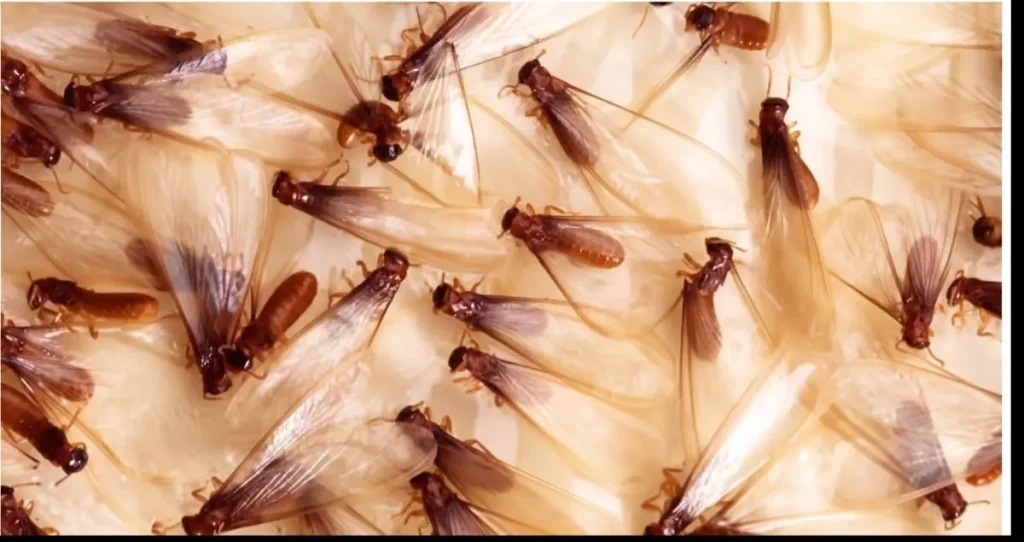
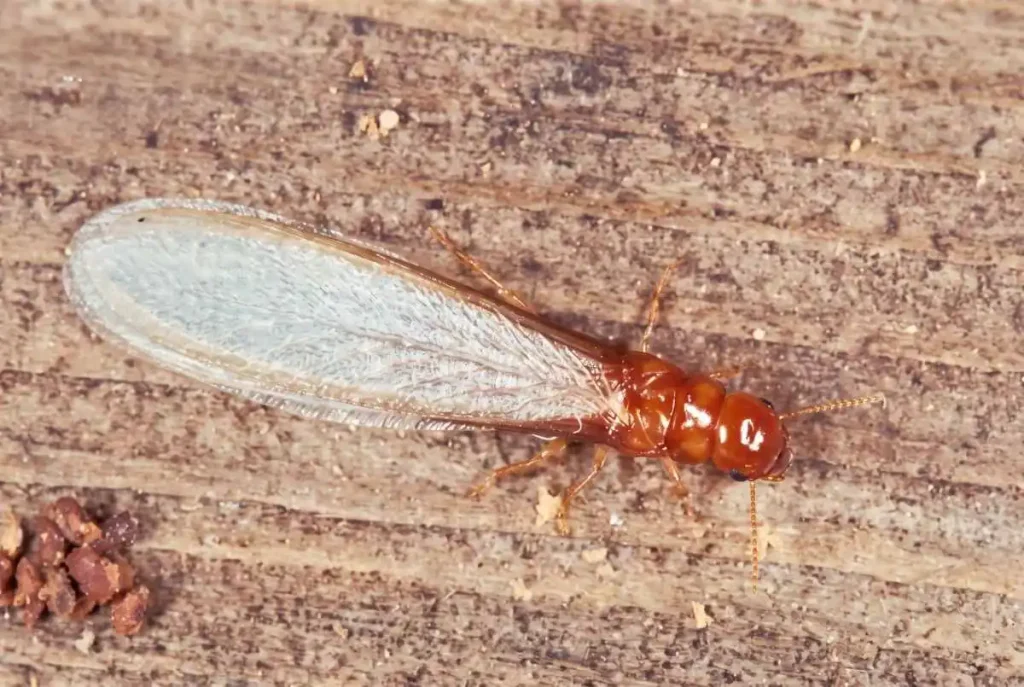
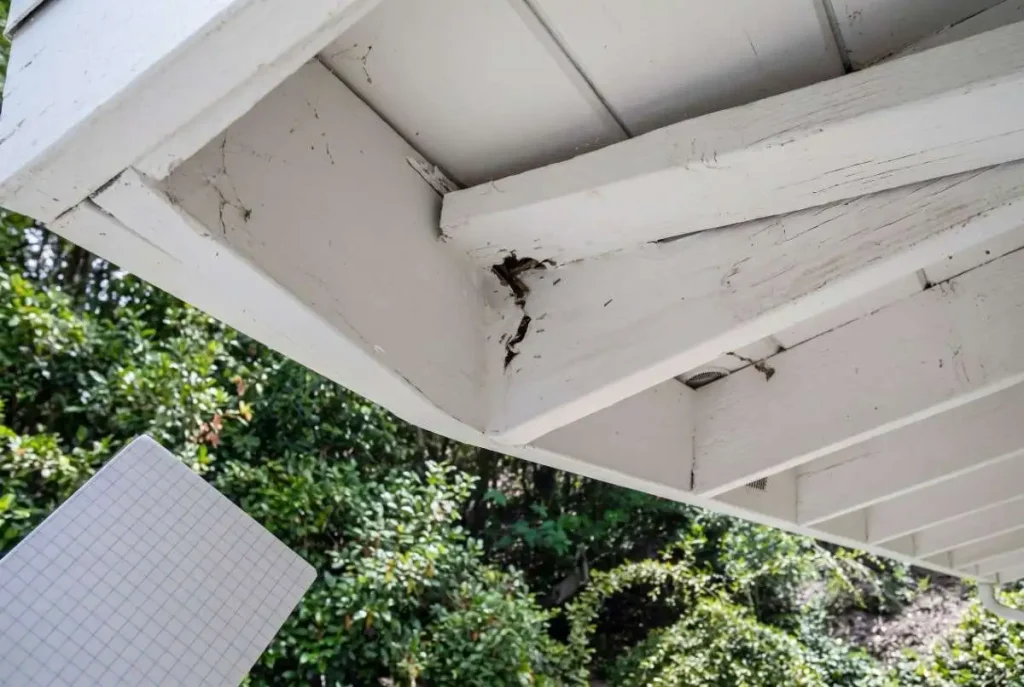
Drywood termites live directly inside wood and don’t need soil contact. Commonly found in attic framing, fascia boards, window and door frames, decks, fences, siding, and furniture.
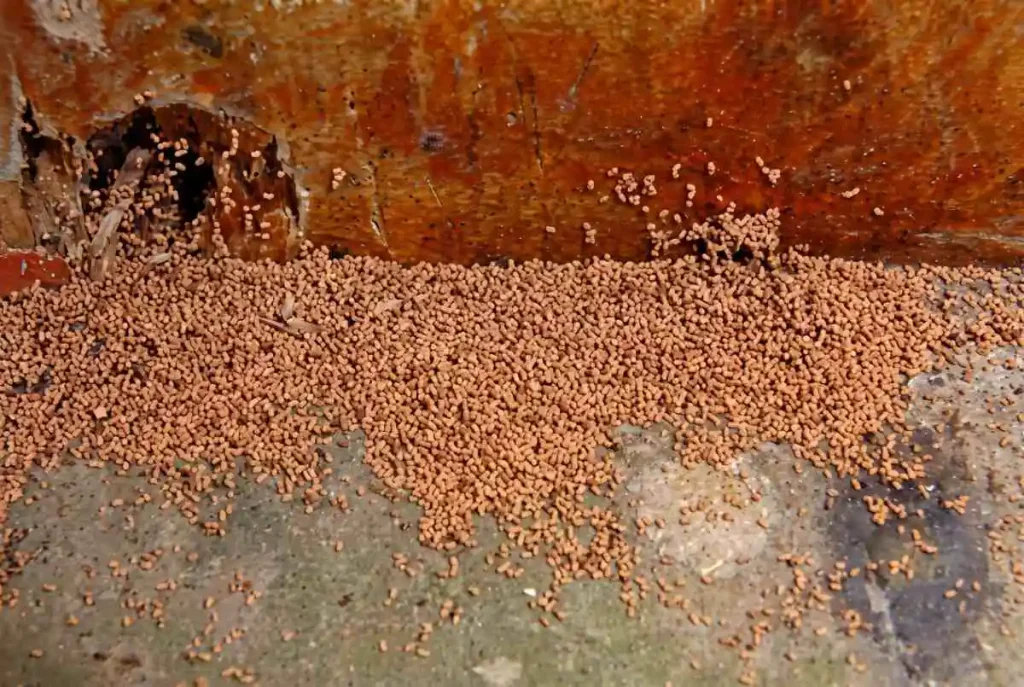
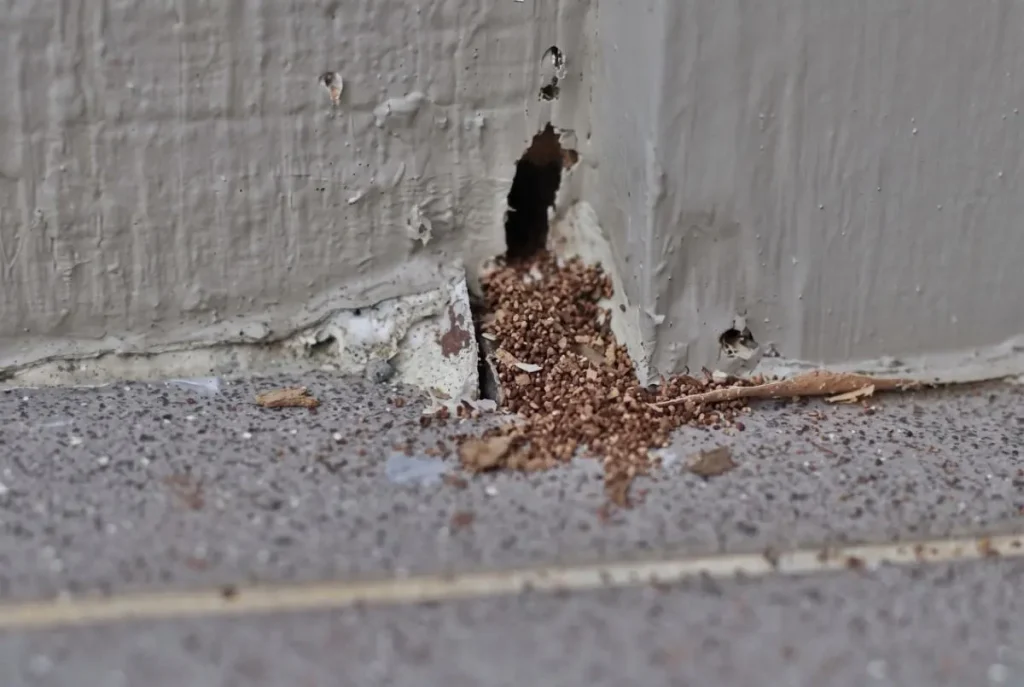
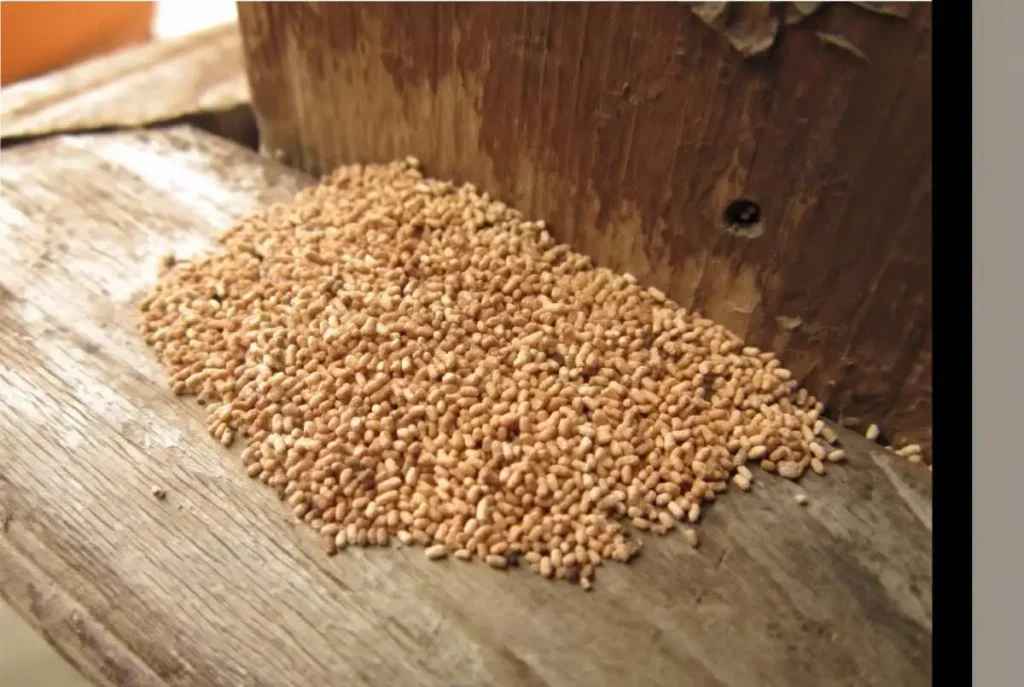
Their most recognizable sign is frass, droppings that look like tiny hard pellets, often described as sand, salt-and-pepper, or sawdust. Frass tends to collect below a pinhole-sized “kick-out hole” in the wood. Finding it confirms activity, but not how large or widespread it is, that takes an inspection.
Subterranean Termites
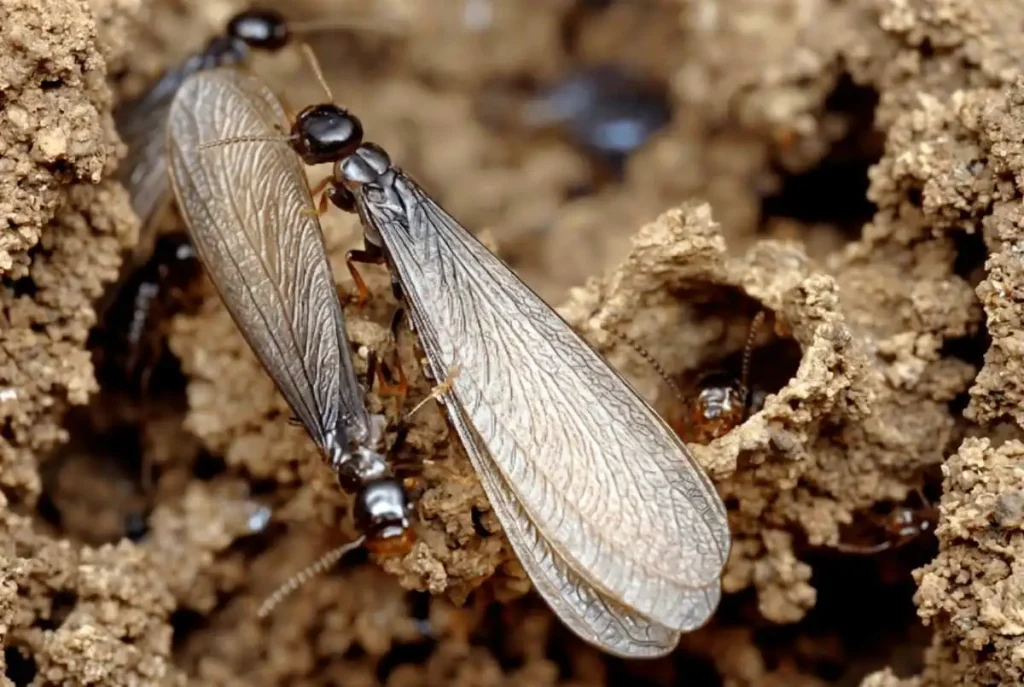
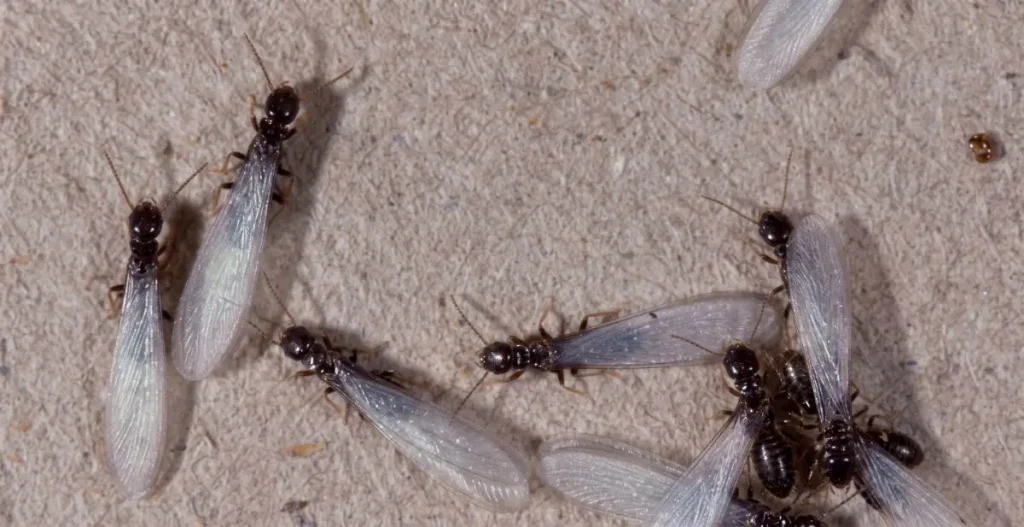
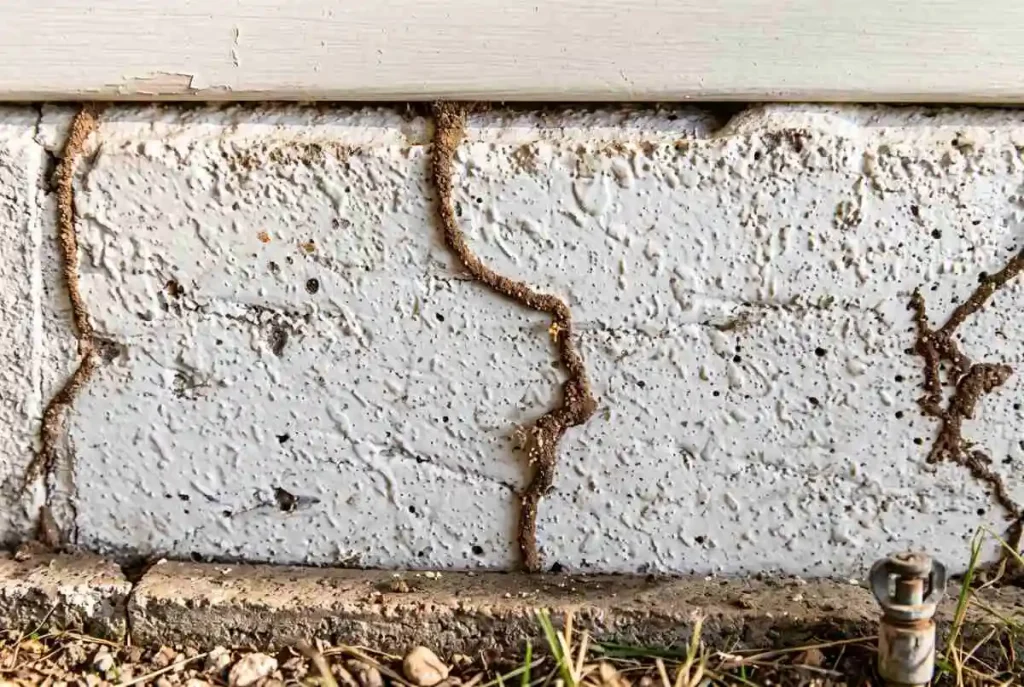
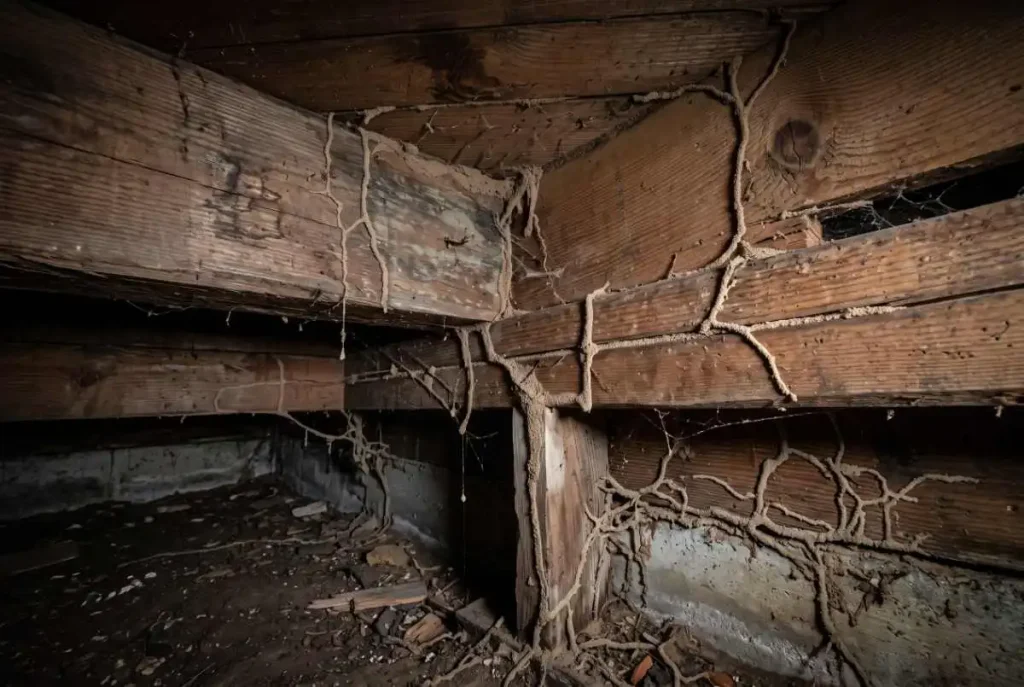
These live primarily in soil and travel up into a structure looking for wood and moisture. Their signature sign is a mud tube found along foundation walls, on concrete, in crawl spaces, around plumbing penetrations, or along piers and posts. Subterranean termites depend on moisture and usually stay connected to a soil or moisture source.
Side-by-Side Comparison
| Feature | Drywood Termites | Subterranean Termites |
| Main habitat | Inside wood | Primarily underground |
| Soil contact needed | No | Usually |
| Common sign | Frass or pellets | Mud tubes |
| Common LA locations | Attics, fascia, windows, doors, decks | Foundations, crawl spaces, walls |
| Typical treatment | Localized treatment or fumigation | Soil or perimeter treatment |
Correct identification matter, drywood and subterranean termites aren’t treated the same way.
Common Signs of Termites
You can have termites without ever seeing a live one:
- Frass — small pellet piles underneath wood
- Discarded wings — near windows, doors, light fixtures, or baseboards after a swarm
- Mud tubes — tunnels along concrete, foundations, or walls
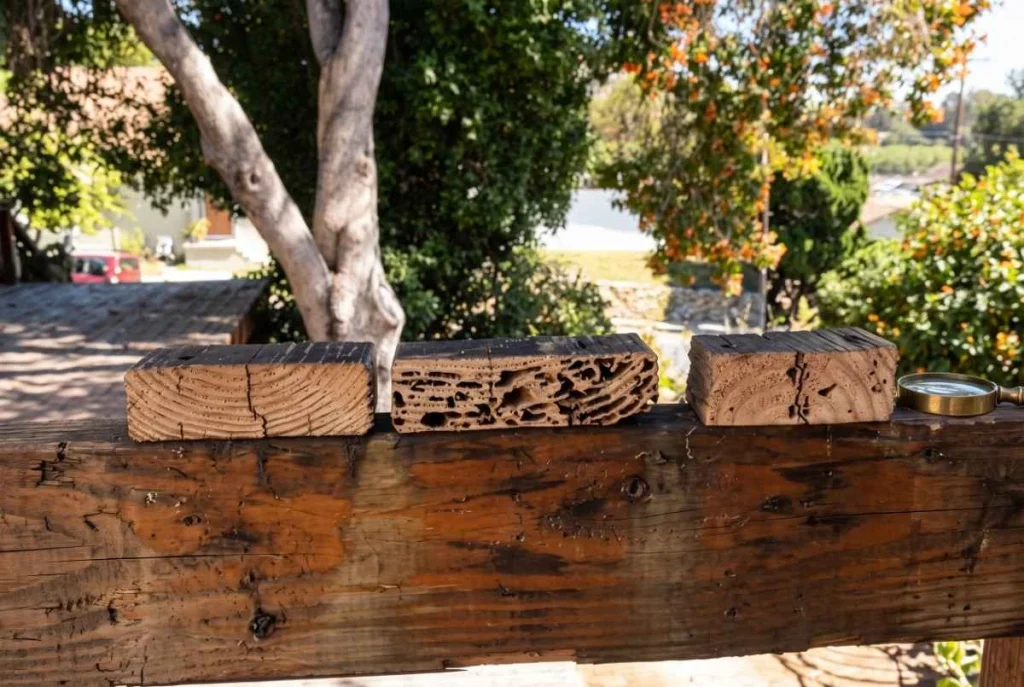
- Hollow or damaged wood — the surface may look fine while the inside is eaten out
- Small holes in wood — used by drywood termites to push frass out
- Blistered wood surfaces — a sign of weakened or hollow wood underneath
When Do Termites Swarm in Los Angeles?
Drywood termites typically swarm in warmer weather, especially late summer and fall. Subterranean termites typically swarm in spring, often after rain.
Seeing swarmers doesn’t automatically mean your house is infested but swarmers or wings appearing repeatedly inside your home is worth having checked.
Found Wings But No Termites?
Very common. Swarmers shed their wings shortly after landing, so you can find dozens of wings with no insects in sight. Check window sills, doors, baseboards, light fixtures, bathrooms, and attics.
If you find a concentrated pile of similar-sized wings, take a photo before cleaning it up, it’s useful evidence for identification.
What Does Termite Damage Look Like?
Termites often eat wood from the inside, so the surface can look normal even with significant internal damage.
- Drywood damage: galleries crossing the wood grain, smooth inside, often containing pellets
- Subterranean damage: follows the wood grain, may contain soil or mud, usually near moisture
Visible damage never tells the full story, termites often stay concealed inside walls and framing that aren’t easily accessible.
Do You Need a Termite Inspection?
Consider one if you’ve found: live termites, swarmers indoors, repeated wing piles, drywood pellets, mud tubes, hollow or damaged wood, past termite damage, or evidence in multiple areas.
An inspection identifies the termite species, where activity is located, how widespread it appears, contributing property conditions, and which treatment options make sense.
Does Finding Termites Mean Fumigation?
No. Treatment depends on the species, where activity is located, how many areas are affected, whether they’re accessible, and the construction of the property.
Some drywood infestations qualify for localized treatment; widespread or inaccessible activity may call for whole-structure fumigation. Subterranean termites require a different approach altogether. We walk homeowners through what was found and what’s actually necessary before any decision gets made.
Fumigation Cost in Los Angeles
Pricing depends mainly on the size and dimensions of the structure. If you already know fumigation may be needed, you don’t have to wait days for a ballpark number, text us your property address and our team can typically prepare an initial estimate within minutes during business hours (Mon–Fri, 9 AM–6 PM).
Already have another company’s report or estimate? Send it over for a second opinion. We may be able to offer a better price, warranty, or treatment option.
People Usually Ask
What do flying termites look like? Straight antennae, a broad waist, and two pairs of wings of roughly equal length. Most often seen near windows, doors, or lights during swarm season.
What do termite droppings (frass) look like? Tiny hard pellets resembling sand or coarse pepper, usually collected below a pinhole in infested wood.
Are termite wings a sign of activity? Yes.Shed wings mean swarmers were nearby recently. Wings appearing repeatedly indoors is a good reason to have the property checked.
Does seeing one termite mean I have an infestation? Not necessarily. A single swarmer may have flown in from elsewhere. But wings, frass, mud tubes, or repeated sightings are good reasons to have the area inspected.
Is a photo enough to identify termites? Often, for a preliminary read, clear photos of swarmers, wings, frass, mud tubes, or damaged wood can tell an experienced eye a lot. Only an in-person inspection can determine the full extent of an infestation.
Think You Found Termites?
You don’t have to figure it out alone. Text us:
- A photo of what you found
- Your property address
- Where in the home you found it
Call or text My Termite Company at (818) 940-0203, and our team will help you determine the right next step.
We provide termite inspections, drywood and subterranean termite treatment, fumigation and fumigation alternatives, preventative treatments, termite wood repairs, and second opinions throughout Greater Los Angeles.
