

What Are Carpenter Ants? How to Identify & Get Rid of Them
My Termite Company finds and removes carpenter ant nests across Los Angeles. This page covers how to identify carpenter ants, where they nest, what causes an infestation, how our technicians remove a colony, and what treatment costs. My Termite Company has served Los Angeles since 2008 under California SPCB License #7487. If you see large black ants, sawdust piles, or a faint rustling in your walls, call (818) 940-0203 for pricing. See our full ant control in Los Angeles page for other ant species.
What Are Carpenter Ants
Carpenter ants are large ants. They excavate wood to build nests, and they target wood already softened by moisture or decay. Los Angeles carpenter ants belong to the genus Camponotus. Three species drive most calls in the region. Camponotus modoc appears uniformly black with dark red legs. Camponotus vicinus shows a mix of red and black. Camponotus clarithorax carries yellow and black markings. Our technicians find Camponotus modoc most often on Los Angeles jobs, with Camponotus vicinus close behind.
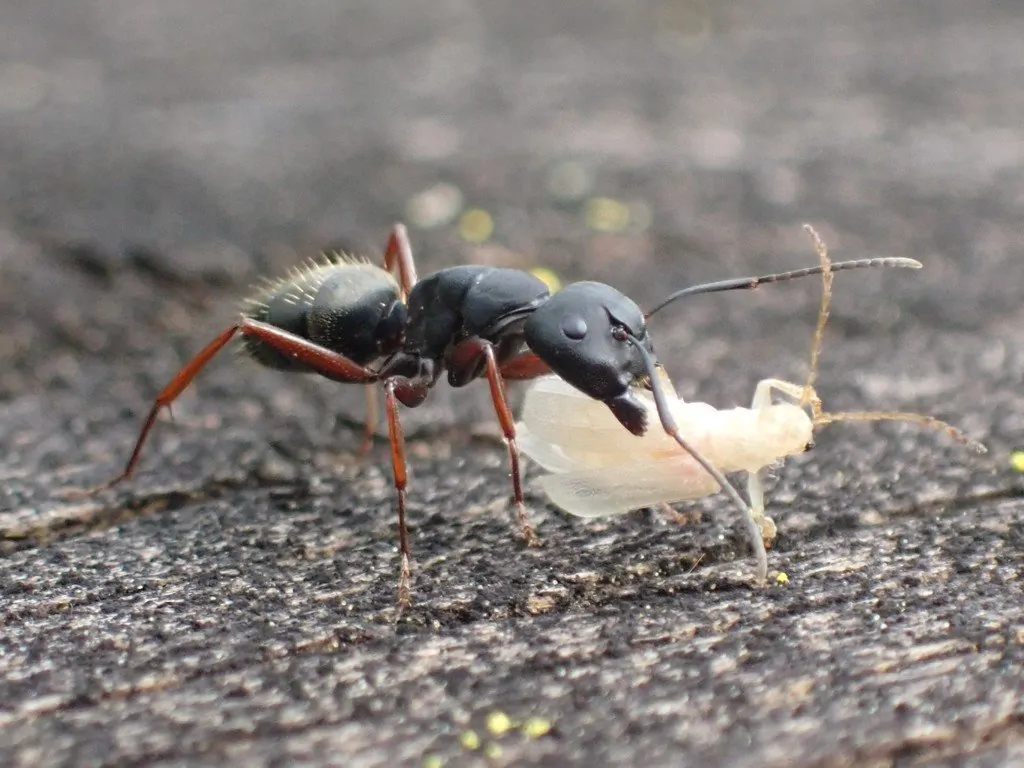
Carpenter ants feed on dead and living insects, nectar, fruit juices, and honeydew from aphids. They do not eat wood the way termites do. They chew through it and carry the debris outside the nest. Nests turn up in trees, stumps, wall voids, hollow doors, and insulation. A carpenter ant nest inside your home points to a moisture or decay problem in the structure, not a random invasion. The next section shows you how to tell a carpenter ant apart from other ants in your yard.
How to Identify Carpenter Ants
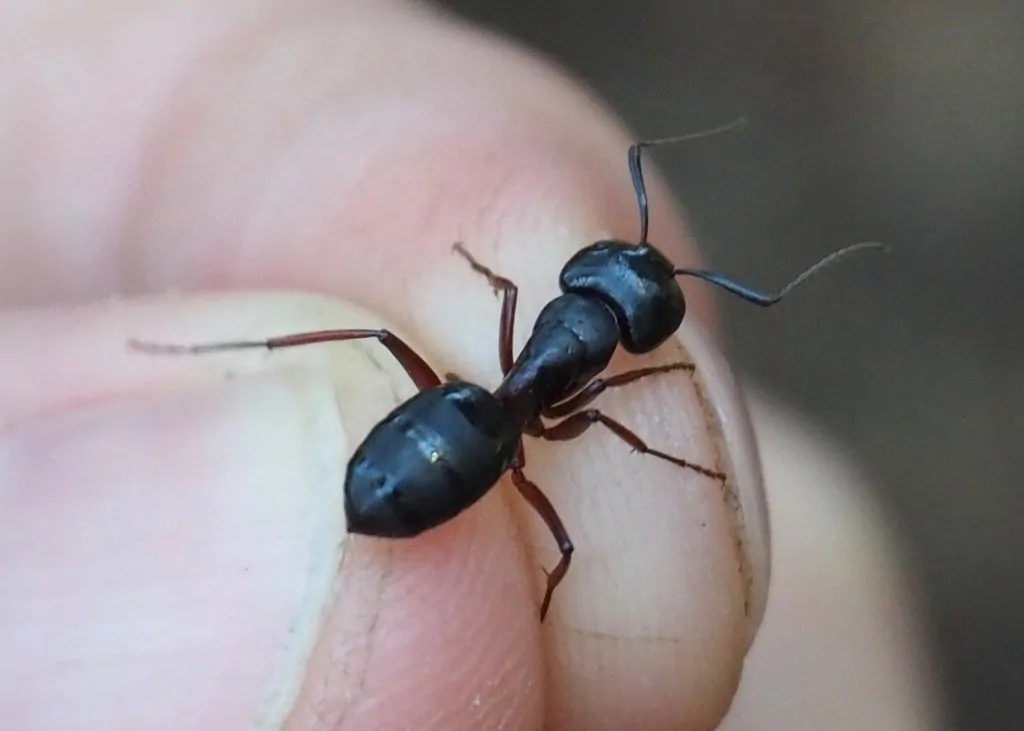
Identify a carpenter ant by three traits, one bump on the waist, an evenly rounded back seen from the side, and bent, elbowed antennae. Argentine ants and odorous house ants share your yard and kitchen, and homeowners mix them up with carpenter ants often. The table below settles it fast.
How Big Are Carpenter Ants
Workers of Camponotus modoc and Camponotus vicinus measure 1/4 to 1/2 inch long, close to the length of a grain of rice stood on end. Camponotus clarithorax runs smaller, from a little over 1/8 inch to under 5/16 inch. The queen grows slightly larger than the biggest workers.
What Color Are Carpenter Ants
Color changes by species. Camponotus modoc looks solid black with red brown legs. Camponotus vicinus mixes red and black across the body. Camponotus clarithorax shows yellow and black bands. Color alone will not confirm the species. Waist shape and back shape settle the identification.
Carpenter Ants vs Look Alike Ants in Los Angeles
| Trait | Carpenter Ant | Argentine Ant | Odorous House Ant |
|---|---|---|---|
| Size | 1/4 to 1/2 inch | 1/12 to 1/4 inch | 1/16 to 1/8 inch |
| Color | Black, red and black, or yellow and black | Light to dark brown | Dark brown to black |
| Waist | One raised node | One flat node | One node, hard to see |
| Back shape | Evenly rounded | Uneven, with a dip | Uneven, with a dip |
Send us a close up photo of your ant and we confirm the species before you spend money on the wrong treatment.
Do Carpenter Ants Have Wings
Yes. Reproductive carpenter ants grow clear wings with heavy veining and leave the nest on mating flights each spring. Camponotus modoc tends to swarm in the late afternoon, often right after a heavy rain, which lines up with the Los Angeles rainy season from November through April.
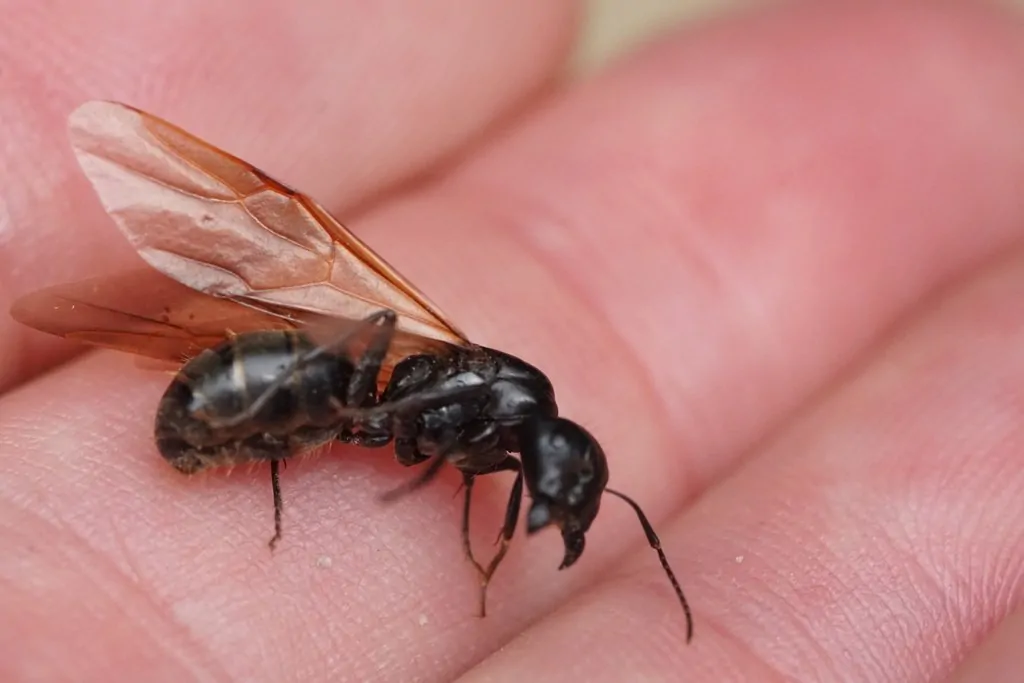
Homeowners confuse winged carpenter ants with termite swarmers constantly, and the mix up leads to the wrong call. Check the traits below before you decide what you are looking at.
| Trait | Carpenter Ant Swarmer | Termite Swarmer |
|---|---|---|
| Antennae | Bent, elbowed | Straight, beaded |
| Waist | Narrow, pinched | Broad, no pinch |
| Wings | Front wings much larger than back wings | All four wings equal length |
| Wing loss | Wings stay attached longer | Wings shed within minutes |
Winged ants inside your home point to a mature colony living inside or right next to the structure, not ants wandering in from the yard. If you find a winged ant indoors, seal one in a bag or jar for our inspector. A close look under a hand lens settles the species in seconds.
Signs of Carpenter Ants in Your House
The main signs are fibrous sawdust, frass, a faint rustling inside walls, and ants moving after dark.
- Fibrous sawdust piles below a wall, window frame, or baseboard
- Frass, a mix of insect parts and wood shavings, near the nest entrance
- A faint rustling sound inside walls, floors, or woodwork, especially at night
- Ant trails showing up after sunset, since carpenter ants forage most in the dark
- Shed wings scattered on a windowsill or floor
Check windowsills, baseboards, under sinks, and around tubs first. Carpenter ant sawdust is fibrous and stringy. Drywood termite pellets are hard, six sided, and look like sand. Drywood termites rank among the top pest risks in Los Angeles, so a pellet pile calls for a different response than a sawdust pile.
Where Do Carpenter Ants Nest
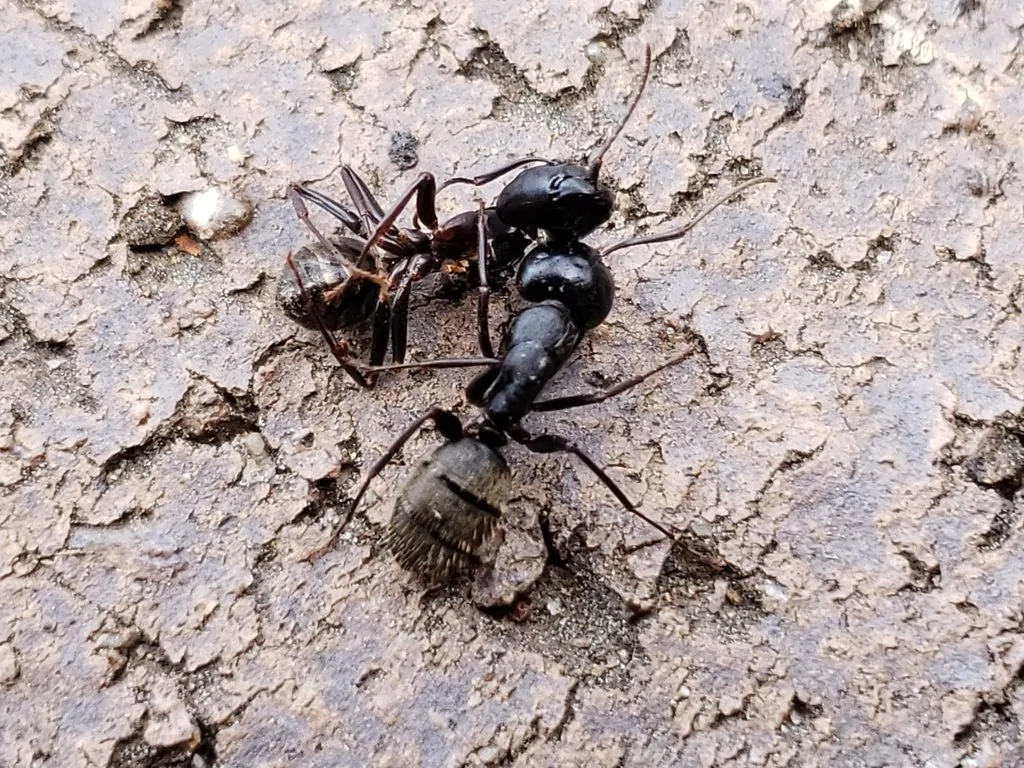
Carpenter ants nest in wood, outdoors in trees and stumps and indoors in wall voids, hollow doors, and insulation. Most indoor nests start as satellites of a larger parent nest living in a tree on or near your property. The parent nest holds the queen and the youngest larvae. Satellite nests hold the older larvae and pupae, and they favor warmer, drier spots close to the parent colony.
Damage begins where wood already carries water damage or decay, not in sound, dry lumber. On Los Angeles jobs, our technicians find nests most often in crawl spaces, attics, walls near tubs and sinks, around roof leak zones, and inside hillside decks exposed to irrigation runoff. A hidden leak feeds a hidden colony. Check these areas twice a year, once before the rainy season and once after, and you catch a new nest before it spreads through a wall.
What Causes Carpenter Ants in Your House
Moisture damaged wood and easy access from trees and shrubs cause most carpenter ant problems. A new queen looks for wood already carrying moisture or partial decay, since sound dry lumber resists her mandibles. Five causes show up again and again on Los Angeles jobs.
- A plumbing or roof leak soaking framing over months
- Branches or shrubs touching the roof or siding
- Mulch piled more than three inches deep against the foundation
- Firewood stacked against an exterior wall
- Sweet food, spills, and aphid honeydew on plants near the house
Ants travel along branches and through small gaps in siding, so a tree touching your roof works as a bridge straight into your attic. Fix these five points and you remove most of what draws a colony to your property.
- Trim branches and shrubs back from the structure
- Seal cracks and gaps in the foundation and siding
- Keep mulch at 2 to 3 inches deep near the building
- Replace decayed or water damaged wood
- Store firewood off the ground and several feet from the house
What Ants Eat Wood, Carpenter Ants vs Termites
Carpenter ants do not eat wood. They excavate it to build nests. Termites eat wood for food. Carpenter ants feed on insects, nectar, fruit juices, and honeydew instead.
| Trait | Carpenter Ants | Termites |
|---|---|---|
| Wood use | Excavate for nest space | Eat wood for food |
| Debris left behind | Fibrous sawdust pushed outside the nest | Six sided pellets, or mud tubes for subterranean species |
| Antennae | Bent, elbowed | Straight, beaded |
| Waist | Narrow, pinched | Broad, no pinch |
| Wings | Front wings larger than back wings | All four wings equal length |
Not sure which one is chewing through your wall? Book a licensed inspection and get a straight answer before you spend money on the wrong treatment.
Are Carpenter Ants Active in Winter
Carpenter ants stay mostly inactive in winter, but a nest inside a heated part of a building keeps working year round. Los Angeles winters run mild compared to the colder regions most carpenter ant research comes from, so outdoor colonies here likely slow down less than the research suggests. Based on what our technicians see in the field, a carpenter ant sighting indoors during a cool month points to a nest already living in a warm wall void or attic space, not a fresh invasion from outside. A winter sighting still deserves an inspection.
How Many Carpenter Ants Are in a Colony
A mature carpenter ant colony holds several thousand workers, one queen, and a network of satellite nests spread across your property. A mature black carpenter ant colony holds roughly 2,000 to 4,000 individuals, and a Camponotus vicinus colony sometimes supports up to 40 queens at once. Workers live 4 to 5 years. Queens live up to 15 years, and a colony needs 3 to 6 years to reach full size.
The ants crossing your kitchen counter make up a small share of the colony living somewhere in or near your home. Treatment has to reach the nest itself, or the colony rebuilds within weeks.
How to Get Rid of Carpenter Ants
Find the nest and treat it directly. Killing the ants you see will not remove the colony, since a handful of foragers make up a small piece of a much larger population living elsewhere on the property.
- Follow night trails. Carpenter ants forage most after dark, so a flashlight walk after sunset shows you where the trail leads.
- Locate the nest with a nontoxic bait such as sugar milk (equal parts sugar and milk), diced crickets, or mealworms placed along the trail.
- Switch to a slow acting bait once ants start feeding, so workers carry the toxicant back and share it with the queen and the rest of the colony.
- Fix the moisture source and replace decayed or water damaged wood, or the next queen moves right back in.
- Trim branches away from the structure and seal cracks and gaps to cut off new entry points.
DIY vs Professional Carpenter Ant Treatment
| Task | DIY | Professional |
|---|---|---|
| Finding the nest | Limited to visible trails | Trained inspection reaches hidden wall and attic nests |
| Products | Store bought sprays scatter the colony | Professional-grade products applied by licensed technicians |
| Satellite nests | Rarely found or treated | Traced back from the parent nest |
| Follow up | No follow-up | Follow-up to make sure the colony is gone |
Store bought sprays scatter a colony into two or three new nests instead of removing it. A licensed applicator uses products and placement methods a homeowner will not find at a hardware store.
Carpenter Ant Treatment Cost in Los Angeles
Carpenter ant treatment pricing in Los Angeles depends on the job. Four factors set the final number.
- Nest location, since a nest inside a wall or attic takes more time to reach than an exposed outdoor nest
- Number of active nests found during inspection
- Property size and the number of structures needing treatment
- Moisture repair work needed to stop the colony from coming back
| Service | Price |
|---|---|
| One time ant treatment (general) | Call for pricing |
| Carpenter ant nest treatment | Call for pricing |
| Quarterly residential plan | $300 every 3 months, or $240 every 3 months with a yearly agreement |
| Quarterly apartment plan | Call for pricing |
Call (818) 940-0203 for pricing. After we look at the property, you get an exact number before any work starts.
Carpenter Ant Control in Los Angeles, Our Process
My Termite Company removes carpenter ants in five steps, identify activity, locate the source, apply treatment, follow up on results, and prevent return.
- We identify the ant species and confirm activity level during a full property inspection.
- We locate the parent nest and any satellite nests using bait trails and a look at moisture prone areas.
- We apply a targeted treatment matched to the nest location and the size of the colony.
- We follow up after treatment to make sure the colony is gone.
- We recommend the repair and prevention work needed to stop a new colony from moving in.
My Termite Company has served Los Angeles since 2008 under California SPCB License #7487, with a 4.8-star rating from 70+ Google reviews. We treat properties across Los Angeles and the surrounding cities, including Pasadena, Burbank, Alhambra, and Highland Park.
Carpenter Ant Damage Repair
Carpenter ants leave hollow tunnels behind in the wood they nest in. Replace the damaged wood once treatment is complete, since the tunnels weaken the beam or frame even after the colony is gone. Damage usually starts where wood already carries water damage or decay, so a repair job without a moisture fix invites the next colony in. My Termite Company handles both steps. Request a repair estimate once your inspection confirms the extent of the damage.
Frequently Asked Questions
How long do carpenter ants live?
Workers live 4 to 5 years. Queens live up to 15 years, which is why an untreated colony keeps growing for years.
Are carpenter ants dangerous to my home?
Camponotus modoc and Camponotus vicinus rank among the most destructive carpenter ants in the Western US. A nest inside structural wood weakens beams and frames over time.
Will carpenter ants come back after treatment?
Not when we treat the full nest and fix the moisture problem drawing ants in.
Do you identify ants from photos?
Yes. Send a clear, close up photo through our contact form, and we confirm the species before you book a visit.
Do you treat carpenter ants in apartments and businesses?
Yes. Our commercial pest control team treats carpenter ants in apartment buildings, offices, and other commercial properties across Los Angeles.
Get Rid of Carpenter Ants Today
Call (818) 940-0203 for pricing or to schedule carpenter ant treatment in Los Angeles. Our technicians find the nest, stop the damage, and fix the cause, not only the ants on your counter.
